Roof damage after storms often raises an important question for homeowners: Should the roof be repaired or replaced? Insurance adjusters and roofing contractors frequently reference something called the 25% rule in roofing when evaluating storm damage and repair options.
Getting a grip on how this rule operates can empower homeowners to make smart choices in the aftermath of severe weather. In Minnesota, where roofs face hail, snow, and freeze–thaw cycles, knowing when repairs are no longer sufficient is critical for protecting the home and ensuring proper insurance coverage.
What the 25% Rule in Roofing Means
The 25% rule comes from building code requirements adopted by the Minnesota State Building Code, which follows the International Building Code. It states that when more than 25% of a roof’s covering is repaired or replaced within any 12-month period, the entire roof must be brought up to current code requirements. In practice, crossing that threshold typically triggers a full replacement rather than continued patching, because updating the whole roof to code is usually more cost-effective than layering on additional partial repairs.
The threshold matters because bringing a roof up to current code can involve more than just new shingles. Depending on when the home was built, compliance may require ice and water shield, proper underlayment, drip edge, and updated ventilation; work that doesn’t make sense to perform on a partial section. This is why understanding when to repair, patch, or replace your roof becomes critical after a major storm: small repairs accumulate, and once they cross 25% within a 12-month window, full replacement is usually the better path.
Why Roofing Inspections Focus on Damage Percentage
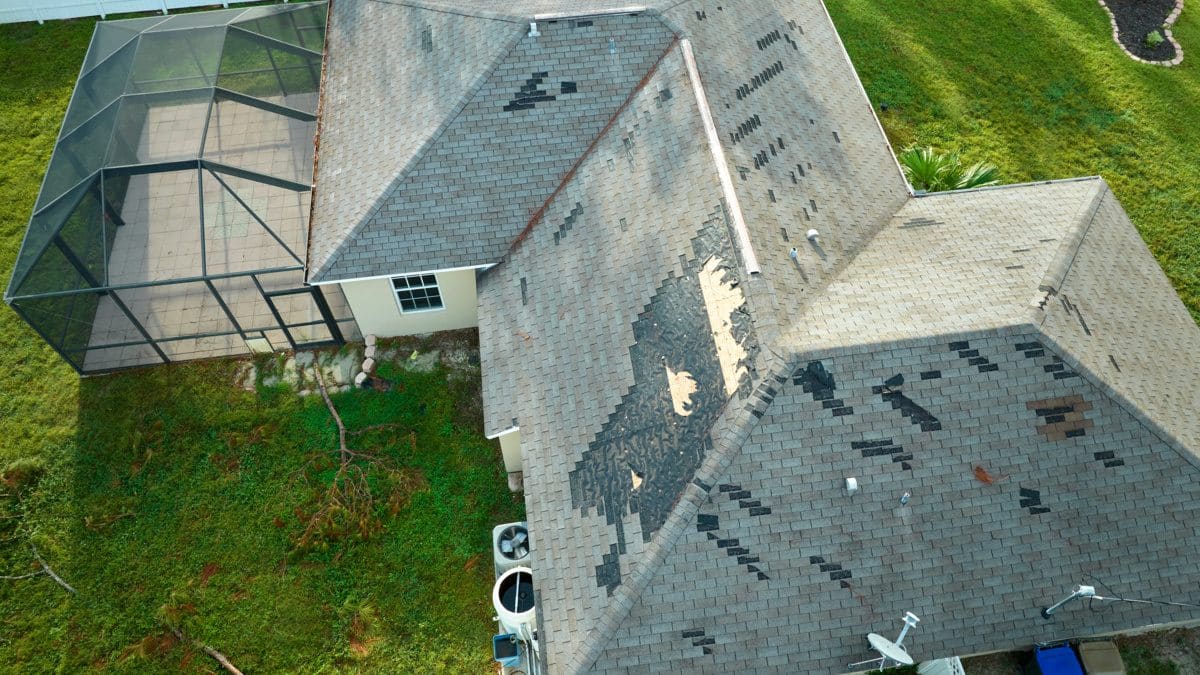
Small areas of damage can often be repaired without affecting the rest of the roof. But once damage spreads across multiple slopes or approaches the 25% threshold, partial repairs stop being a reliable long-term solution.
Roofing professionals often evaluate:
- The percentage of damaged roofing materials
- The location of damage across the roof
- The age and condition of the roof
- Whether matching materials are still available
That last point is closely tied to the 25% rule. Shingle styles and color batches change over time, and when discontinued or unavailable, matching materials force a repair to extend beyond the damaged section just to maintain visual consistency; the affected area can quickly exceed 25%. When that happens, full replacement becomes both the code-compliant choice and the more economical one.
How the 25% Rule Affects Roof Replacement Decisions
The 25% rule is commonly used as a guideline during a storm damage roof inspection. Once damage reaches a certain threshold, repairing isolated areas may no longer restore the roof’s full performance.
To determine the best course of action after a storm, it helps to know how contractors evaluate roof repair vs replacement. Contractors and insurance adjusters assess whether roof damage requires repairs or full replacement. If a significant area is compromised, a complete replacement may be necessary.
When Insurance May Require Full Replacement
If you’re wondering what to do if a roof claim is denied, it’s key to know how insurers decide on full replacements. They may approve it if repairs can’t restore the roof’s integrity, especially in cases of widespread damage or if matching materials are unavailable.
Factors insurance adjusters may evaluate include:
- Total area of roof damage
- Age of the roofing materials
- Structural integrity of the roof deck
- Compatibility with existing materials
- Compliance with building codes
These considerations help support that the repaired or replaced roof can protect the home from future storms. Our insurance claim assistance helps homeowners navigate inspections, documentation, and next steps clearly.
How Contractors Calculate the Affected Roof Area
Accurately assessing damaged roof sections is crucial for evaluating storm damage. If you need a roofing contractor in Apple Valley, our team measures each roof slope to determine the percentage of affected materials rather than relying solely on visual estimates.
Steps Used During a Professional Roof Inspection
During an inspection, contractors typically perform several evaluations to document damage properly.
Common inspection steps include:
- Measuring roof sections and slopes
- Identifying damaged shingles or roofing materials
- Inspecting flashing, vents, and ridge lines
- Photographing affected areas for documentation
- Reviewing siding, gutters, and exterior components
Detailed inspection reports help homeowners understand the full scope of damage and support insurance claims when necessary.
What Homeowners Should Document After Storm Damage
Proper documentation plays a major role when filing insurance claims for roofing damage. Homeowners who capture storm damage early make it easier for contractors and adjusters to assess whether repairs or storm-resistant roofing options are the better long-term solution.
Taking photos soon after a storm helps capture damage before weather exposure causes additional deterioration.
Important Things to Document
After a storm, homeowners should look for signs of roof damage and document anything unusual around the property. Items worth documenting include:
- Missing or lifted shingles
- Visible hail impact marks
- Damaged flashing or roof vents
- Debris or branches on the roof
- Siding or gutter damage
These records can help roofing contractors and insurance adjusters determine whether the damage may require repairs or replacement.
Why Timely Inspections Protect Your Property
Storm damage is not always visible from the ground, and delaying an inspection can drive up repair costs as minor issues worsen over time. Small impacts to shingles or roofing materials can gradually deteriorate as weather continues to affect the roof.
Leaks can develop gradually, allowing moisture to reach attic insulation or roof decking before visible signs emerge. Scheduling a professional inspection after a storm helps identify hidden damage early and enables cost-effective repairs.
Does Your Roof Pass the 25% Rule? Your Next Steps for Roof Repair or Replacement
Understanding what the 25% rule in roofing means can help homeowners make informed decisions after severe weather. Professional inspections help determine whether repairs are sufficient or whether a roof replacement may be necessary.
Advantage Construction provides professional Minnesota roofing inspections and storm damage evaluations designed to protect your home and support accurate insurance documentation. Contact Advantage Construction today to schedule an inspection and ensure your roof is properly evaluated after a storm.