
Managing a commercial property means juggling priorities, and roof maintenance often falls behind more visible concerns. Unfortunately, commercial roofs don’t fail loudly at first. Problems usually develop slowly, beneath membranes, around penetrations, or at drainage points, until they disrupt operations or require costly repairs. Today, we’ll break down essential commercial roof maintenance tips that help busy owners protect their buildings, control long-term costs, and avoid avoidable downtime. Drawing on real-world experience from Advantage Construction, a trusted Minneapolis roofing contractor, we focus on practical steps that deliver measurable value.
Why Commercial Roof Maintenance Matters
Commercial roof maintenance isn’t just about preventing leaks; it’s about preserving the full value of the roof system you already own. Regular maintenance addresses small vulnerabilities before they evolve into structural or insulation damage that shortens the roof’s lifespan.
Routine roof maintenance can extend the service life of a commercial roof compared to roofs that only receive reactive repairs. That extension can represent years of deferred replacement costs and fewer operational disruptions. When maintenance is treated as a system, not a one-off task, it becomes one of the most cost-effective investments a building owner can make.
A Practical Commercial Roof Maintenance Checklist
A successful roof maintenance program doesn’t require constant attention, but it does require consistency. The following checklist highlights the core areas professional roofing teams evaluate during routine maintenance.
Regular Roof Inspections
Scheduled inspections are the foundation of effective commercial roof maintenance. These inspections identify early signs of membrane wear, seam separation, or mechanical damage before water infiltration occurs.
Professional inspections typically occur at least twice per year and after major weather events. By documenting conditions over time, inspections help owners track deterioration trends and plan repairs strategically instead of reacting to emergencies.
Drainage and Debris Management
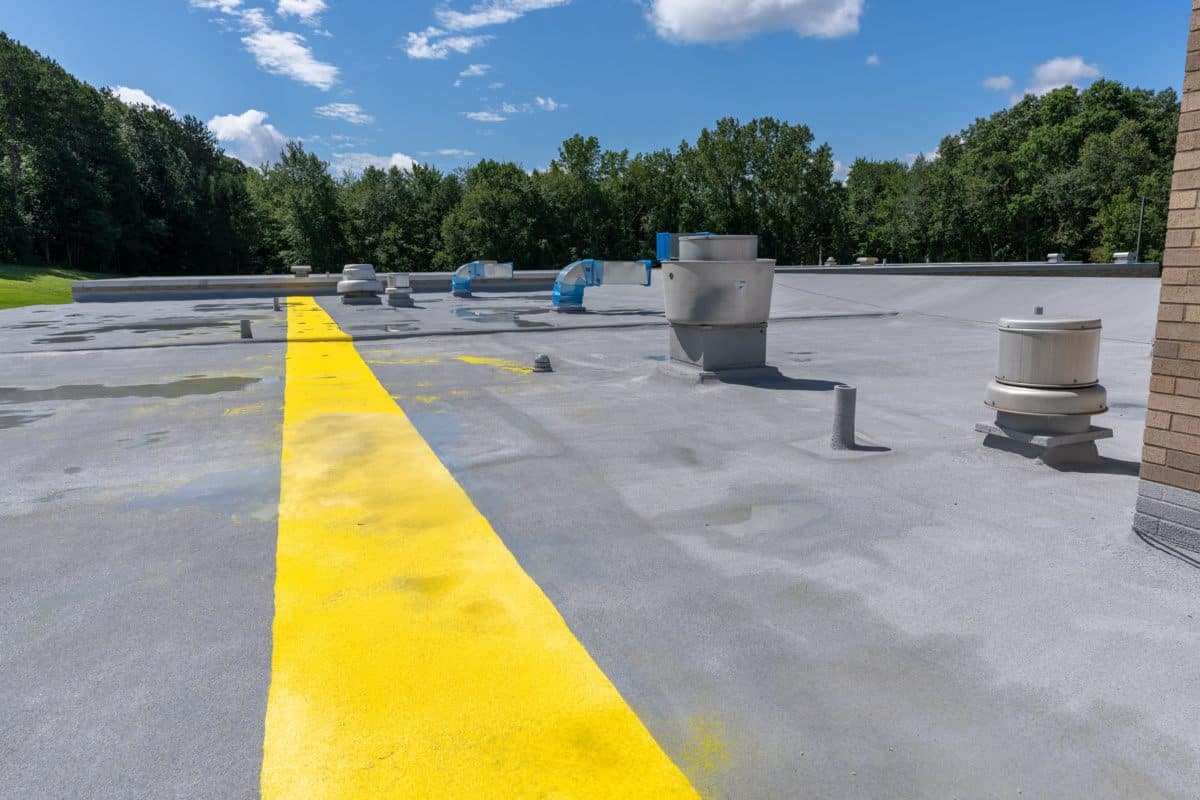
Standing water is one of the most damaging conditions for commercial roofing systems. Leaves, gravel, and rooftop debris often block drains and scuppers, forcing water to remain on the roof surface longer than designed.
Clearing debris and confirming proper drainage reduces stress on membranes, prevents saturation of insulation, and lowers the risk of freeze-thaw damage. Drainage checks are simple tasks with an outsized impact on roof longevity.
Flashing, Seams, and Penetrations
Flashing and roof penetrations are frequent failure points, especially around HVAC units, vents, and skylights. Sealant degradation or movement at these locations can allow water intrusion even when the membrane itself remains intact.
Routine maintenance includes inspecting flashings for looseness, cracks, or separation and correcting minor issues before they affect surrounding materials. Regardless of the commercial roofing material installed, these transition points typically determine long-term performance, and minor adjustments often prevent much larger repair scopes later.
Surface and Membrane Condition
Over time, commercial roofing membranes experience UV exposure, thermal movement, and mechanical wear. Blisters, wrinkles, or surface cracks may not leak immediately but often signal underlying stress.
Identifying surface deterioration early allows targeted repairs instead of full-system replacement. Maintaining membrane integrity preserves waterproofing performance and extends the roof’s usable life.
What Owners Can Monitor vs. When to Call a Professional
Not every maintenance task requires a contractor, but knowing where to draw the line is critical for safety and effectiveness.
Owner-Level Monitoring
Building owners or facility staff can safely monitor visible conditions from approved access points. This includes checking for debris accumulation, documenting visible damage after storms, and watching for interior signs such as ceiling stains.
These observations support maintenance planning but should not replace professional evaluations. Proper documentation helps roofing professionals act quickly and accurately when issues arise.
Professional Maintenance Tasks
Commercial roof maintenance performed by qualified professionals goes beyond surface observation. Contractors assess membrane adhesion, flashing integrity, drainage performance, and moisture intrusion using specialized tools and experience.
Professional maintenance also protects warranty compliance and ensures repairs follow manufacturer and code requirements. Attempting advanced repairs without proper training can void warranties and worsen damage.
How Often Should Commercial Roof Maintenance Be Scheduled
Maintenance frequency should reflect how a building is used and exposed to environmental stress. While many roofs benefit from semi-annual inspections, some conditions require more frequent attention.
High-traffic roofs, older systems, or buildings exposed to frequent storms often need additional monitoring. Scheduling maintenance after major weather events also helps identify hidden damage before it escalates. A consistent schedule transforms roof care from a reactive expense into a predictable operating cost.
How Advantage Construction Supports Commercial Roof Performance
Effective commercial roof maintenance depends on experience, documentation, and clear communication. Advantage Construction provides commercial roofing services that support long-term roof performance, not just short-term fixes.
Our maintenance approach includes thorough inspections, clear reporting, prioritized recommendations, and coordination with future repair or replacement planning. As a Minneapolis roofing contractor, we understand how regional weather patterns affect commercial roof systems and tailor maintenance accordingly. By treating maintenance as part of a lifecycle strategy, we help owners protect their buildings and budget with confidence.
Protect Your Commercial Roof Before Small Issues Become Big Problems
Commercial roofs rarely fail overnight, but when they do, the consequences can be disruptive and expensive. Consistent commercial roof maintenance reduces risk, extends roof life, and provides owners with greater control over long-term costs.
If you’re responsible for a commercial property and want a clear, manageable maintenance plan, Advantage Construction can help. Our team delivers practical insight, professional care, and dependable service backed by local experience. Contact Advantage Construction today to schedule a commercial roof maintenance evaluation and keep your building protected for years to come.