

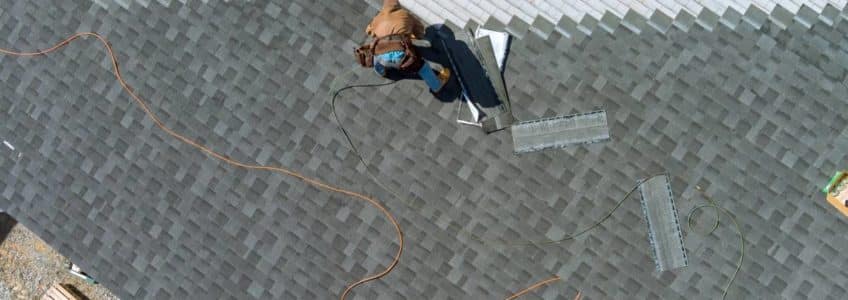
Maplewood’s housing is not old enough to be historic and not new enough to be under warranty. The older western neighborhoods are post-war bungalows and ramblers; the eastern side is largely 1980s and 1990s two-story homes. Across the city, almost a third of housing units are more than fifty years old and more than two-thirds are over thirty, which means most homes here are on their second or third roof rather than their first replacement.
The decision is rarely whether the roof has failed. It is whether it has enough life left to leave alone, and whether a storm did anything to it. Two local requirements shape how that plays out. The city wants photographs of work the shingles will cover before it will close your permit, and it requires a Truth-in-Housing evaluation before a home can be shown, which puts the roof’s condition into a document a buyer reads. This guide compares six companies on how they handle both, alongside storm damage and insurance claims.
Maplewood Requires Photos of Your Underlayment and Flashing
Maplewood’s roofing permit costs a flat $146. Once the city processes it, you get an email with a link to an online drop box, and your contractor has to upload photos of the underlayment and flashing there. City staff check those photos and approve them before your job goes on the list for the final inspection. One thing to know if you are booking winter work: the city says roof inspections cannot be done if snow-covered.
This matters because underlayment and flashing get covered within hours of going on. If nobody photographs them, your permit never closes, and an open permit is the kind of thing you find out about years later when you are trying to sell. So when you take bids, ask each contractor who takes the photos, who uploads them, and who follows the final inspection through. A company that often works in Maplewood will answer straight away. Permit rules are set city by city, and contractors whose work is mostly in Roseville or Woodbury may not have run this one before.
Which Storms Have Actually Hit Maplewood
An insurance claim needs a date. If a contractor tells you hail damaged your roof, the first question is which storm, and the answer has to match what the weather service recorded for your area. So here is what has actually hit Maplewood since 2011, taken from National Weather Service reports and the Minnesota DNR rather than the hail maps roofing companies buy.
Since 2011, the weather service has named Maplewood in three storm reports. That is a thin record for fifteen years in a hail state, and it is worth knowing before a contractor tells you which storm did your roof. Where a report names a neighboring city rather than Maplewood, the distance matters, because hail footprints are narrow.
| Date | What was recorded |
| 19 June 2026 | Hail of roughly 1.25 to 1.75 inches. DNR says hail “battered” Maplewood. NWS measured 2 inches or more just across the line in north and east St. Paul |
| 20 September 2022 | Hail of 1 to 1.25 inches in Maplewood and Little Canada |
| 19 June 2012 | Wind damage recorded at St. Paul “near the Maplewood border,” with 64 mph measured nearby |
There is no single size at which shingles fail. Haag Engineering’s threshold table, which most adjusters work from, puts functional damage near 1 inch for three-tab shingles and 1¼ inch for laminated, and IBHS research published in 2025 found that repeated smaller hail strips granules and leaves a roof far more vulnerable to the next storm. Age, shingle type, and temperature all move the number.
Both recorded Maplewood events sit in that range, so a roof predating September 2022 has two dates worth asking an inspector about. The date alone settles nothing: on June 19, 2026, areas west of downtown St. Paul got no rain while areas a mile north got hail. What decides a claim is what an inspector finds on your slopes, matched to a storm recorded for your address. A thirty-year-old roof can also be failing for reasons no storm caused, and how contractors decide between repair and replacement is a separate call.
What Happens to Your Roof When You Sell in Maplewood
Maplewood requires a Truth-in-Housing evaluation before a home can be shown. A city-licensed evaluator inspects the property, files the report with the city, and the owner has to display it on site and hand a copy to the buyer before any contract is signed.
It is disclosure rather than a repair order, but city inspectors can use the report to require that code violations be corrected. So a patch done without a permit, or a permit left open because nobody uploaded the photos, becomes a line in a document your buyer reads. If a sale is anywhere in your next few years, the question worth putting to a contractor is how they close the permit out, not only what the work costs. The city takes questions on 651-249-2300.
What a Maplewood Roof Replacement Costs
The 2025 Cost vs. Value Report puts an asphalt shingle roof replacement in the Minneapolis area at about $31,000. The report puts the resale recovery near 60%, so roughly three-fifths of the cost comes back when the house sells. That is a regional average rather than a quote for your house. It also prices a large standard job, and most Maplewood ramblers are smaller than what it models, so what a roof actually costs here is the number to work from.
Six things affect what your roof will cost:
- Tear-off or layover: Two layers is the limit. A layover is cheaper now and dearer later, because the next roof has to take both off.
- Decking: Unknown until the shingles are off. Get the per-sheet price in writing first, so a discovery is not a negotiation on the day.
- Size, pitch, and complexity: Squares drive materials, pitch drives labor, and dormers, valleys, and chimneys drive flashing hours. A rambler and a two-story of the same square footage are not the same job.
- Ventilation: If the attic is under-vented, fixing it is part of the roof, not an upsell.
- Class 4 shingles: More up front, and several carriers give a premium credit. Minnesota requires none, so ask yours before you choose.
- The permit: A flat $146.
When a quote prices the tear-off, the decking, and the ventilation separately, you can see what each contractor has actually included. Otherwise, the cheapest one may just be the one that assumed your decking is fine.
What We Looked for in Maplewood Roofers
We looked at published services, storm documentation, insurance assistance, licensing, and any evidence of work in Maplewood or east Ramsey County. We gave more weight to companies that explain how they work than to companies that just say they are good. Advantage Construction publishes this guide and appears first. That reflects our judgment rather than a score, and it is not an audit of anyone’s credentials. Our own certifications, awards, and review ratings are published so you can apply the same checks to us.
One thing applies to every company here, us included. None of the six can show a completed job in Maplewood: no addresses, no dated photos, no permit numbers. Several have Maplewood service-area pages, but that tells you where a company will drive, not where it has worked. Maplewood has no public permit search, so you cannot check from outside. Ask each company for two Maplewood addresses and the month the work was done, and see who can answer.
How to Check and Verify A Contractor
Everything a roofing company says about itself, from the license to the certifications to the years in business, is self-reported until you check it. The records behind those claims are public and free to search, and four checks take about ten minutes. They work on every company in this guide, including us.
- License: Search the company name at ims.dli.mn.gov and choose “Continue as guest.” The status has to read “Issued.” Minnesota has three classes, and the difference matters: BC covers new construction and remodeling, CR covers work on existing homes, and RR covers roofing only. A company holding RR cannot contract for your gutters, soffit, or fascia.
- Enforcement history.: Search the same name in the Department of Labor and Industry’s published enforcement actions. DLI posts 2024 onward. For anything older, call Enforcement Services at 651-284-5069.
- Complaints: Open the company’s BBB profile and add /more-info to the end of the address. That is where the licensing data and government actions sit. The main profile page usually leaves both out.
- Manufacturer credentials: If a company shows a GAF, Owens Corning, or Malarkey badge, look it up in that manufacturer’s own contractor directory rather than on the company’s website. A genuinely certified contractor is listed there with a contractor ID.
One warning about the third check. BBB’s government actions block does not reliably show state enforcement. A contractor working in this market has an A+ rating and a blank government actions section on BBB, while DLI’s own list records two consent orders against that same license. When the two disagree, believe the DLI records. And an A+ rating is not the same thing as BBB accreditation – two companies in the table below have the rating without the accreditation.
Quick Comparison of Roofing Companies
These six were selected based on published services, licensing, and process detail, the same way we built our East Bethel list. The differences are in the last column. License numbers are as published by each company rather than pulled from the state register, including ours, which you can check against our published licenses and certifications. No company paid to appear here or to be placed where it is.
| Candidate | MN license # | Location | BBB | Google Review | Most relevant comparison point |
| Advantage Construction | BC660998 | East Bethel | A+ since 2013 | 4.8 / 755 | Roof, siding, windows, and gutters documented on one claim |
| American Eagle Home Improvement | BC669090 | White Bear Lake | A+, not accredited | 4.9 / 193 | Owens Corning Platinum Preferred, verified, ID 224674 |
| Northern Exteriors | BC297099 | Cottage Grove | A+, not accredited | 4.9 / 77 | The only one publishing Maplewood’s permit-photo requirement |
| Tacheny Exteriors | BC642547 | Oakdale | A+ since 2015 | 4.7 / 235 | Owens Corning Platinum Preferred, verified, ID 100772 |
| Three Rivers Contracting | BC760638 | St. Paul Park | A+ since 2019 | 4.9 / 77 | The only published process that names supplements |
| Capital Siding, Windows & Roofing | BC053636 | Woodbury | A+ since 1996 | 4.9 / 88 | GAF Certified, verified, ID 1003607 |
1. Advantage Construction: Coordinated Storm Restoration and Claim Documentation
At Advantage Construction, our storm work is built around the two things a Maplewood claim turns on: the date and the evidence. We photograph every affected component with the date attached, count impacts inside marked test squares on each slope so the damage can be checked rather than asserted, and write an itemized scope covering roof, siding, windows, gutters, trim, and flashing. We meet the adjuster on site, and when something is missed or disputed, we respond in writing with photo support.
Because we carry roofing, siding, windows, and gutters, hail that took the roof and the aluminum window wraps stays one claim with one contractor instead of two of each. We handle the city’s underlayment and flashing photos as part of the job, which is what keeps a permit from sitting open for years. Every claim in the table above is one you can check on us too. Our licenses, insurance, and EPA lead-safe certification are published in full, and so is the manufacturer credential behind our warranties. What we provide on a claim is documentation and construction scope through our insurance claims assistance. The coverage decision is still your carrier’s, and so is the payment.
2. American Eagle Home Improvement: Verified Permit History Next to Maplewood
American Eagle Home Improvement publishes roof inspection, repair and replacement, storm damage repair, emergency response for leaks, gutters, and attic insulation and ventilation. It states it has been in business for over 60 years. Its service-area pages cover Ramsey County and the east metro but do not name Maplewood.
Consider it when a documented work history matters more than a local landing page: 816 permits over the life of the business, including re-roofs at named addresses in east St. Paul directly adjoining Maplewood. That market has its own set of options, which we compared in our St. Paul guide. Clarify Maplewood availability, current crew capacity given the fall in permit volume since 2023, and whether claim documentation is included, since the site describes storm repair but publishes no insurance claims process.
3. Northern Exteriors: Documented Permit Compliance and Flashing Work
Northern Exteriors publishes a Maplewood page covering roof repair and replacement, storm damage documentation, adjuster cooperation, and coordination with siding work. Its description of the city’s underlayment and flashing photo requirement is accurate against Maplewood’s own roofing handout, including the point that roof-to-wall flashing can finish behind siding and that kick-out flashing has to carry water clear of the wall.
Consider it when permit documentation is the part you are worried about. Clarify three things: the page states Maplewood also requires weather-resistive-barrier photos for siding, which no city document we found supports; its project proof covers Cottage Grove and Woodbury in Washington County and nothing in Ramsey County; and its Malarkey Certified Pro credential does not appear in Malarkey’s directory.
4. Tacheny Exteriors: Well-Defined Claim-Support Process
Tacheny Exteriors lists Maplewood in its service area and publishes its storm process as discrete stages: inspecting and documenting the damage, presenting the findings, attending the adjuster meeting, and reviewing the proposed scope with the customer before work starts. It operates from Oakdale, one of the closest locations in this comparison to Maplewood.
Consider it when you want to know where a claim stands at each step rather than at the end. Clarify which records you receive at each stage, and how the estimate treats work the insurer has not approved. One figure to set aside: the Tacheny review score quoted on several sites is GuildQuality, not Google, so it does not compare with the ratings in the table above.
5. Three Rivers Contracting: Documented Storm Dates and Supplemental Claims
Three Rivers Contracting explicitly serves Maplewood and publishes roofing, storm restoration, siding, gutter, and insulation services. Its process documents damage within 72 hours with the storm date attached, walks every elevation with the adjuster, and submits supplements for hidden or code-required items found after tear-off.
Consider it when the roof is already on its second or third layer, because supplements are the mechanism that gets unexpected decking paid for rather than argued about on the day. Clarify two things: the public adjuster firm it routes claims negotiation to appear among its own partner sites, so those are affiliated rather than independent companies; and its 153 permits are all in Minneapolis, with none in Ramsey County.
6. Capital Siding, Windows and Roofing: GAF-Certified Roofing and Attic Insulation
Capital Siding, Windows & Roofing publishes storm inspections, roof repair and replacement, gutters, siding, and attic insulation across Minnesota and Wisconsin, and has traded since 1997 from Woodbury.
Consider it when hail took the roof, the gutters, and a wall of siding in the same afternoon and you would rather not run three contracts. Clarify Maplewood availability, recent comparable work in east Ramsey County, and exactly what its claim assistance includes, since the process is published in less detail than Tacheny’s or Three Rivers’.
Technical Details That Can Change the Roofing Proposal
Maplewood administers the Minnesota State Building Code, and the city publishes its own roofing requirements on top of it. Most of the items below only surface once the shingles are off, which is the worst moment to start negotiating. Get them into the written scope instead, and see what else our Minnesota roofing work covers on a second or third re-roof.
- Layers: No more than two layers total. There is no blanket tear-off requirement, so tear-off versus layover is a choice, and the quote should price it as one.
- Decking: Shingles need solid sheathing: plywood, OSB, or one-inch boards. Rotted decking has to be replaced before the new roof goes on.
- Ice barrier: A self-adhering membrane, or two cemented layers of underlayment, running from the eave edge to at least 24 inches inside the exterior wall line. Not required at rakes or valleys.
- Kick-out flashing: Required wherever a roof eave meets a sidewall, minimum two and a half inches onto the roof. This is the detail that rots walls when it is left out.
- Ventilation: One square foot of vent area per 150 square feet of attic, or per 300 square feet with a ceiling vapor barrier. In the 1:300 case, 50 to 80 percent of it has to be high vents sitting at least three feet above the eave vents.
- Chimney crickets: Required on the uphill side of any chimney wider than 30 inches.
- Slope: Asphalt shingles need 2:12 or steeper, with double underlayment between 2:12 and 4:12. Roll roofing goes down to 1:12.
The year your house was built tells you nothing about the age of the roof on it. If it has been re-roofed before, ask what was done and when, because one house can end up with different systems on different slopes. Whichever of these items apply to your roof, get them written into the quote because a verbal yes is not something you can hold anyone to.
Start With a Documented Maplewood Roof Assessment
Most Maplewood roofs are old enough that the real question is not whether the roof needs work, but whether a storm caused it. That answer decides whether insurance pays, and plenty of companies will give you the answer that suits them. So we built this list around what could be checked rather than what companies say about themselves.
The right roofer answers that question honestly, shows you the photos behind the answer, and puts the whole job in writing before anyone starts. That is what a free inspection from Advantage Construction gets you: what is damaged, what it needs, what it will cost, and whether it is an insurance claim or not. Contact Advantage Construction when you want a straight answer about your roof.
Frequently Asked Questions
1. Does Maplewood require a reroofing permit? +
Yes. The city requires a permit for tear-off and reroofing, and the residential roofing permit is a flat $146.00. Confirm who applies, who uploads the required photos, and who coordinates the final inspection..
2. What photos does the city actually want? +
Underlayment and flashing are uploaded to the city’s online drop box using the link emailed with your permit. Staff review and approve them before the job joins the list for an in-person final inspection..
3. Does a hailstorm mean insurance will replace my roof? +
No, coverage depends on the damage found, your policy terms, and the insurer’s assessment. A contractor’s findings can support the construction scope, while approval and payment are separate decisions, and what the policy pays and when depends on whether your roof settles at replacement cost or actual cash value.
4. Will the roof show up when I sell? +
Yes, Maplewood requires a Truth-in-Housing evaluation by a city-licensed evaluator before a home can be shown, filed with the city, and given to the buyer before a contract is signed. An open permit or unpermitted work is the kind of thing that surfaces there.
5. Can I put a second layer over the old roof? +
Maplewood permits a total of two layers. Whether that is the right choice depends on the condition of what is underneath, and it should be a priced decision rather than a default.