A storm damages one roof slope or siding wall, and the insurer’s estimate addresses only that area. A partial roof and siding replacement can be reasonable when materials can be repaired properly. Compatibility, availability, appearance, or code concerns may support a broader scope.
Full replacement is not automatic when a product is discontinued or worn out. The contractor documents damage and repair feasibility, while the insurer determines coverage. Those separate roles help homeowners respond with useful information.
Why Partial Exterior Repairs Can Be Difficult
A limited repair must work with the existing system. Color, dimensions, fastening methods, instructions, and surrounding materials all matter.
Weathering Changes Color and Appearance
Sunlight, moisture, oxidation, dirt, and aging can alter shingles and siding. New material with the same color name may look different beside an older surface.
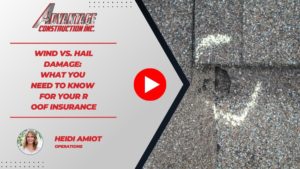
A visible difference does not by itself oblige an insurer to cover undamaged areas, but it is worth photographing anyway, along with the product markings and every point where new material would meet old. Some of what hail leaves behind shows from the ground, though bruising and granule loss usually do not.
Product Lines and Profiles Change
Manufacturers may discontinue colors, dimensions, textures, or fastening systems. Similar-looking siding may have a different locking profile or exposure. Shingles may differ in size, sealant placement, or installation requirements.
These differences affect whether a repair will connect securely and follow instructions. A contractor must compare the proposed material with the assembly and consider disturbance to surrounding components.
A Material Report Provides Evidence, Not a Coverage Decision
A contractor may submit a sample to an identification service such as ITEL. Its report can help identify the manufacturer, product line, color, and possible comparisons. Manufacturer communication may add availability information.
Neither source legally determines that a product is discontinued or unmatchable. The insurer evaluates scope and coverage.
Matching Depends on Policy Language and the Facts
Minnesota does not have the matching statute described in some roofing articles. Minn. Stat. § 65A.28 concerns insurance reporting, while § 325E.66 limits contractor practices. Matching depends on policy wording and loss facts.
What the Cedar Bluff Decision Actually Held
In Cedar Bluff Townhome Association v. American Family, decided in 2014, hail hit twenty townhome buildings. Most were barely damaged at all. Eleven had three or fewer damaged panels, and one had a single damaged panel covering fifteen square feet.
Replacement siding was available from the same manufacturer in the same model, texture, size, and installation method. What was not available was the color, and the existing siding had faded across eleven years regardless.
American Family put the loss at $6,800. The appraisal panel awarded $361,108, and the Minnesota Supreme Court affirmed it. The reasoning is the part worth understanding: the court held that the color mismatch was itself a physical alteration to the covered property, and that is what brought the undamaged panels inside the policy. The court noted that storm claims present their own facts. The decision does not create an automatic right to replace every undamaged surface.
Reasonable Match Does Not Mean Perfect Match
The court drew that line carefully. Comparable means less than identical, but more than near enough, and American Family conceded the principle itself when it acknowledged it could not satisfy the policy by paying for red siding on a yellow building. Where any given claim falls on that spectrum comes down to your policy wording and what the documentation shows. Minnesota has no statutory line-of-sight rule to fall back on.
We can explain product differences and repair feasibility. Policy interpretation belongs to an insurance or legal professional.
When Roof and Siding Replacement Can Remain Partial
A partial scope may work when damage is isolated, compatible material is available, surrounding components remain serviceable, and installation can follow instructions and code. Roofing work might cover shingles or one slope; siding work might cover panels or one elevation. Our roof-system assessment and installation options help clarify what the assembly supports.
A broader scope may be considered when damage is widespread, compatible material is unavailable, a durable repair is impossible, or code applies. None of those guarantees approval.
Building Code Does Not Automatically Require Full Replacement
The adopted code, project extent, manufacturer requirements, and existing conditions shape the repair. Decking, fastening, underlayment, ice barriers, and water-resistive barriers may matter when work exposes them. Code generally applies to the planned work, not every undamaged area.
The limited role of the 25% roofing rule depends on the code edition, project facts, and local enforcement. Policy terms affect whether code-related costs are covered.
How to Respond to a Partial Claim Scope
A partial estimate is a starting point for comparing the insurer’s scope with construction conditions.
- Review the insurer’s estimate. Confirm which slopes, elevations, components, materials, and quantities are included. Ask whether the payment is initial or final and how additional documents should be submitted.
- Document the exterior safely. Photograph damaged and adjacent areas, accessible product markings, and transitions where replacement material would meet existing material. Stay off the roof.
- Obtain a construction assessment. Ask whether the proposed repair is compatible, follows manufacturer instructions, meets applicable code, and can be completed without damaging surrounding material.
- Use material identification when helpful. A third-party report or manufacturer response can support product identity and availability.
- Submit the construction record. Provide the estimate, photos, material findings, installation instructions, and relevant permit or code information through the insurer’s process. Request a written response.
Cashing a check does not have one universal legal effect. Read accompanying documents and ask whether a release or final-settlement condition applies. Consult a licensed public adjuster or attorney for claim representation or legal interpretation.
How Advantage Documents the Construction Scope
We inspect affected slopes, siding elevations, transitions, trim, flashing, and related components. We identify product characteristics, assess repair feasibility, research material options, photograph findings, and prepare an itemized estimate. We provide siding repair and replacement services for Minnesota homes when the scope supports that work.
Matching and availability evidence may give the insurer useful information for another review, but it does not guarantee broader coverage. We explain construction conditions and provide records. We do not interpret the policy, adjust or negotiate the claim, determine coverage, or promise full replacement.
Clarify the Repair Scope Before Materials Are Ordered
Partial work is not automatically inadequate, and full replacement is not automatically necessary. The right construction recommendation depends on the extent, material compatibility, availability, repairability, code, and the exterior system. The insurer separately decides which work is covered under the policy.
Start with a free storm inspection before materials are selected or permanent work begins. Contact Advantage Construction to document roof and siding conditions, compare available products, and explain whether the proposed repair appears workable. You will then have clearer construction information for decisions involving roof and siding replacement.