

Storm Damage Repair Brooklyn Park, MN
When the June 19, 2026, cell crossed into Hennepin County, it dropped one-inch hail over Brooklyn Park, then continued to grow. By the time it reached the far side of the metro, it was throwing golf balls. The Minnesota DNR logged this city as a stop on the way in, before peak strength.
One inch is quarter-sized, the point where shingles shed granules and aging vinyl cracks. It is also not the kind that makes the news, so damage that size gets shrugged off and shows up four winters later as a roof that failed early. Advantage Construction inspects the entire exterior, photographs what we find, and tells you whether filing is worth it.
What To Do In The First Two Days
Claims get harder to prove the longer the evidence sits outside. Work through these in order.
- Assume any downed line is live. A wire on the ground or a limb resting against one is a 911 call. Report outages to Xcel Energy and keep everyone away from the scene until crews clear it.
- Find out whose tree came down. Brooklyn Park owns the trees on public property, including boulevards, and handles them itself. Anything rooted on your lot is yours to deal with, including hauling the debris. Photograph what the tree hit before it gets moved.
- Shoot photos before you touch anything. Branches get hauled, shingle pieces get binned, and the proof leaves with them. The Minnesota Department of Commerce Disaster Information Center puts it plainly. Record the damage first, and hold onto anything broken until your insurer has seen it.
- Do the minimum to stop it getting worse, and save every receipt. Tarping a broken window or catching a drip in a bucket is expected of you. Paying someone to permanently fix it before an adjuster looks is not, and it can cost you the item.
- Write down the date and time. Note when the hail fell and roughly how long it lasted. Claims filed against the wrong storm create arguments later, and this part of the metro catches several a season.
- Ask the door knocker for paperwork. Crews follow hail into the northwest suburbs within hours of a warning. Brooklyn Park requires door-to-door sales agents to hold a city peddler or solicitor license, so ask anyone at your door to show that and their Minnesota contractor license before they go near your roof.
How To Document Damage From The Ground
Nothing below needs a ladder. Steep roofs and wet shingles are how people end up in the emergency room, and walking a hail-struck roof can smear granules, muddying the inspection.
Outside the house
- One wide shot per elevation, then close-ups of anything that looks wrong.
- Granule piles under the downspouts, plus any shingle grit collecting on the driveway or in the gutter trough.
- Dents on soft metal. Gutters, downspouts, roof vents, the AC condenser fins, the mailbox, even the grill lid. Soft metal registers hail size and direction more reliably than shingles do.
- Trim, and this one matters. The vinyl or aluminum trim around windows and doors cracks and pits when the siding beside it still looks fine, and adjusters check it early.
- Cracked or punched screens, chipped glass, dented window cladding.
- Deck boards, railings, fence panels, and the garage.
Inside the house
- Staining on ceilings and walls, particularly at exterior corners and under roof valleys.
- An attic look with a flashlight for daylight through the deck, damp sheathing, or wet insulation.
Worth capturing while you still can
- A quarter photographed beside a hailstone. Quarter-sized hail is the industry standard for damaging hail, so one image tells an adjuster more than a paragraph ever will.
- A stone in the freezer if you caught one.
- A short written note of what you saw and when.
Bring the lot to a professional roof inspection. We handle the roof, the elevations you cannot see, and the measurements. If what you photographed turns out to be age rather than hail, we will tell you that instead of talking you into a claim.


Where Hail Shows Up On Brooklyn Park Homes
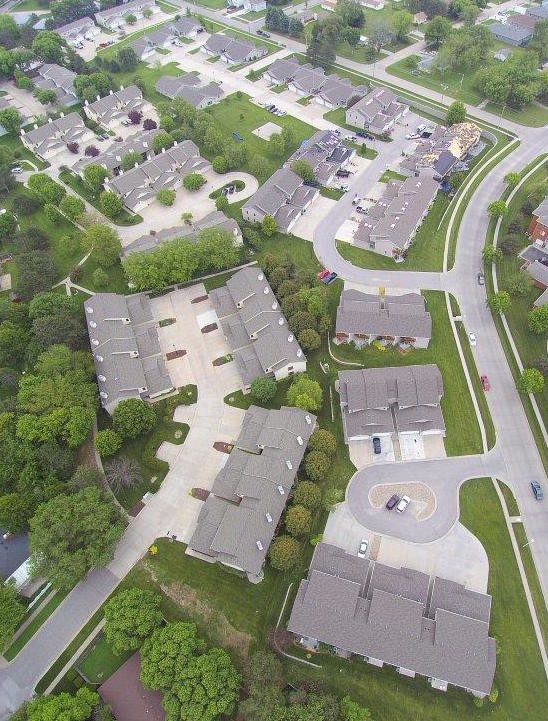
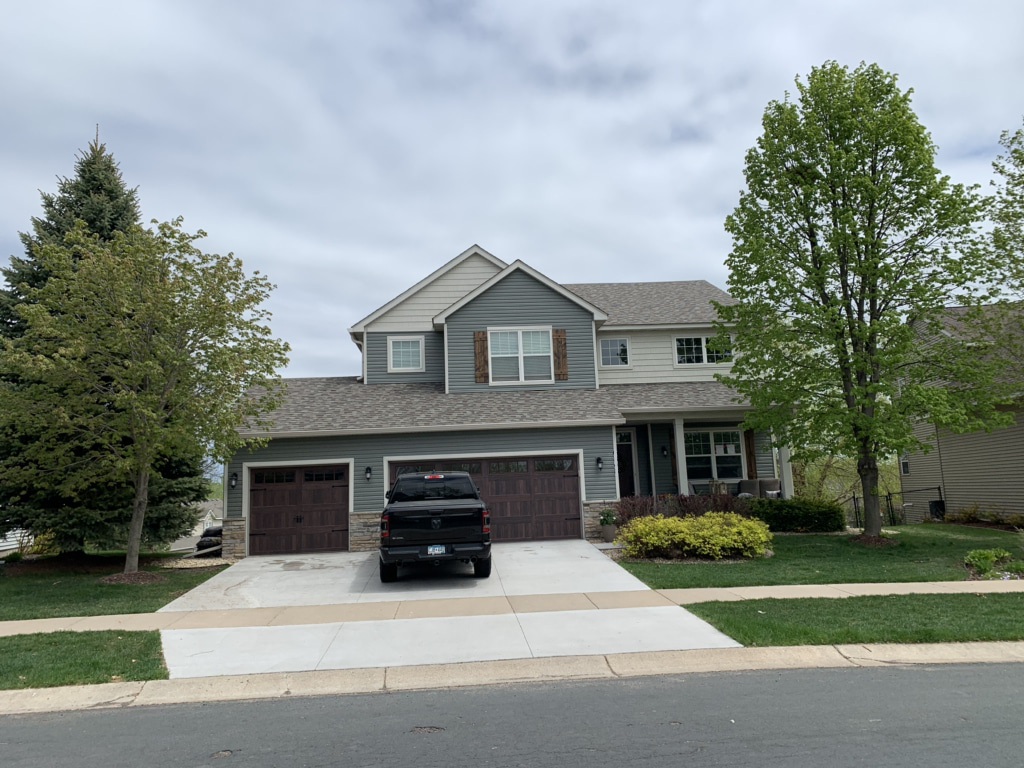
Most of this city went up between the 1970s and the early 2000s, which means large, simple elevations, long, unbroken runs of vinyl, and builder-grade windows and roofs that are all reaching the end of their service lives at roughly the same time. Storm damage behaves differently on that stock than it does on older housing.
Roof
Hail bruises asphalt before it breaks it, a soft dark spot where the granules are gone and the mat is exposed. Wind leaves creases, unsealed tabs, and losses along the ridges and rakes. The wide roof planes on two-story homes here catch hail evenly, which cuts both ways. Damage is easier to establish across a full slope, but easier to miss from the ground, where hail damage on a roof rarely shows at all.
Siding
Vinyl was the default here for thirty years, and panels on a wall since the 1980s or 1990s have gone brittle with UV. Quarter-sized hail that bounces off new vinyl cracks aging vinyl, often as hairline splits you catch only in raking light. Steel and aluminum dent instead, and which elevation took the hit depends on wind direction, so all four get checked. On siding this old, hail is one of the top signs it needs to be replaced.
Windows and Trim
Broken glass is the obvious case and the rarest. What gets skipped is dented cladding, torn screens, seals that fog weeks later, and cracked or pitted trim around the openings. Trim is worth its own pass: common, claimable, and almost never mentioned. Water past a damaged head flashing surfaces as interior staining long after anyone connects it to the storm.
Gutters and Downspouts
Gutters are the most useful component after a hailstorm and the most overlooked. Dents in the trough and apron establish stone size across the lot. Pulled spikes, separated seams, and downspouts off their straps are ordinary wind damage. A gutter left out of pitch or hanging off the fascia is how ice dams start in January, why replacing gutters after hail is not a job to leave for spring.
Also Worth Checking
Fascia and soffit, roof vents and flashing, the AC condenser, decks and railings, and any detached garage or shed, which takes the same hail as the house and falls off the claim more than anything else on the property.
Repair Or Replace? What Decides It
Anyone who answers this from the curb is guessing. Five things settle it.
- How much of the surface took hits. Inspectors mark out test squares on each slope and elevation and count impacts inside them. Scattered marks on one plane point toward repair. Consistent impacts everywhere point toward replacement.
- Whether the material can still be matched. Shingle lines get discontinued, and vinyl fades for twenty years, so a patch on a prominent elevation can end up more visible than the damage was. That is a fair thing to raise with your adjuster.
- What is under the surface. Soft decking, rotted sheathing, or a wall that has been quietly taking water behind cracked siding changes the answer completely.
- How much life was left anyway. Patching a roof that has already shed most of its granules buys a season or two. We will say so rather than sell you the patch.
- Whether the storm actually caused it. Wear, thin original installation, and poor attic ventilation all imitate hail damage. Better to hear that at the inspection than after a denied claim.
Most jobs land between the two, and the inspection is what tells you which side yours falls on. And if the honest answer is age rather than hail, you will hear it. A roof at the end of its run is a full roof replacement worth planning for, not a claim worth filing.
Brooklyn Park Exterior Renovation
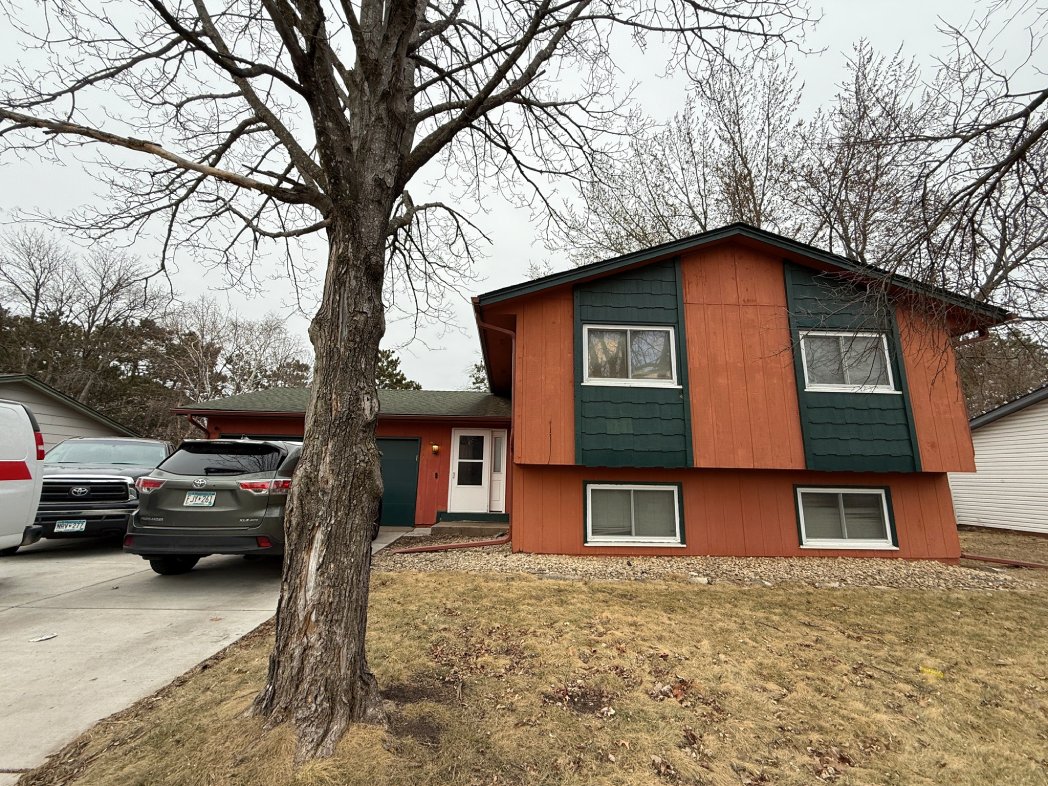
This Brooklyn Park home traded its aging wood siding for low-maintenance vinyl that keeps its color through every Minnesota season, no yearly repainting required. We replaced the worn fascia, soffit, and gutters in a single pass, matching them to the new palette, so the whole exterior comes together as one clean, intentional look built to last.
Before
After
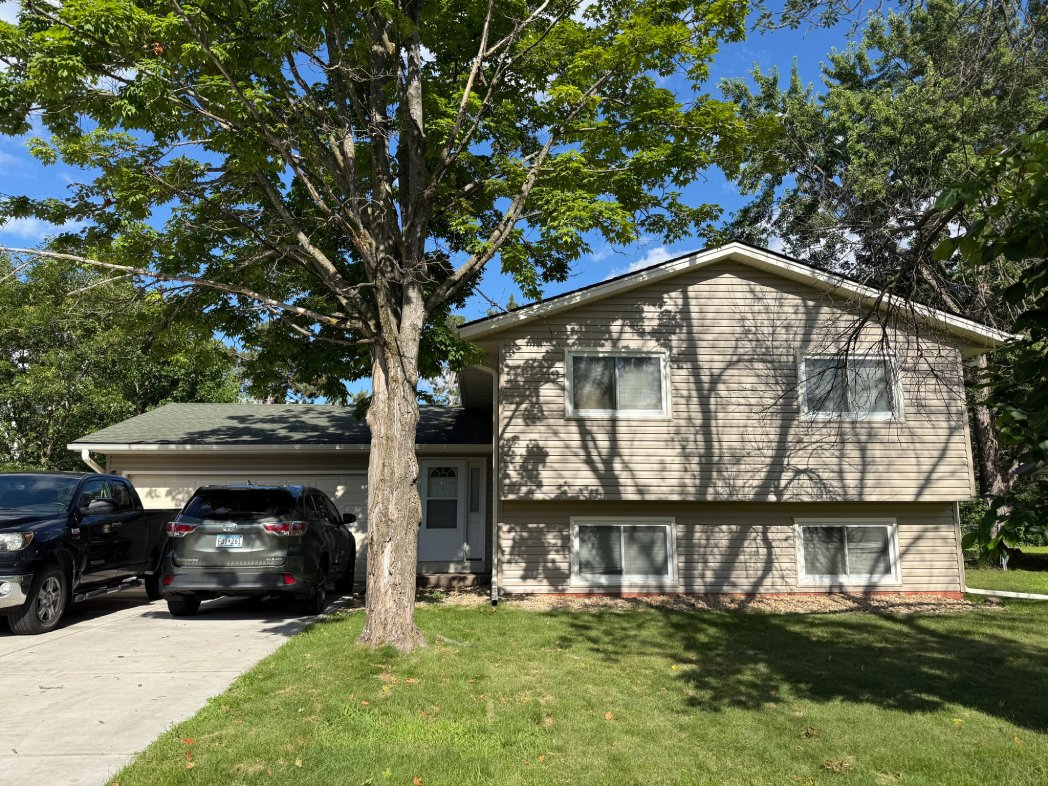
This is what it looks like when the entire exterior is treated as a single project rather than four separate repairs, and it is exactly how we approach every home we work on.
If your own siding, fascia, or gutters are starting to show their age, we are happy to walk through your home and show you where the biggest difference would be.
Documenting The Claim And Meeting Your Adjuster
Adjusters write from the scope in front of them, so the job is making sure nothing is missing from it before the estimate gets written. Whether any of it is covered comes down to your policy, your deductible, and your carrier’s read on the cause, and nobody can promise you that in advance. What our insurance claims assistance does is put the damage on the record properly.
How we handle it
- Every damaged component photographed and dated, detached structures included.
- An itemized written scope covering roof, siding, windows, gutters, and the trim and flashing that go with them.
- We are on site while your adjuster is, so both parties are working from the same evidence rather than comparing notes afterward.
- Anything missed or disputed gets a written response with photographs attached.
- We pull the permits, meet the inspections, and keep the schedule inside your insurer’s repair window.
What the paperwork should tell you
- A deductible offer is a warning sign. Minn. Stat. § 325E.66 prohibits a contractor from advertising or promising to pay, rebate, or absorb any part of your deductible to win work, and requires written notice of that prohibition in the initial estimate. Money that disappears from one line has to reappear somewhere else, and it is your claim carrying it.
- A cancellation notice should be attached. Minn. Stat. § 326B.811 gives you 72 hours to cancel an insurance-funded roofing contract in writing after your insurer denies the claim, and the contractor has to include a detachable notice saying so.
- Nobody should ask you to sign the claim over. An assignment of benefits hands your rights to the contractor, and Minn. Stat. § 325E.67 governs how that works. We do not ask for one.
- The contractor choice is yours. Your insurer can suggest. It cannot decide.
- License numbers belong on the estimate. Minnesota licenses residential contractors through the Department of Labor and Industry, and the lookup is public.
- Your policy sets the clock. Filing windows vary, and some Minnesota policies carry a separate wind and hail deductible. The declarations page spells out both.
For questions about the claim itself rather than the repair, the Minnesota Department of Commerce Disaster Information Center is the state’s own resource, and its Consumer Services Center handles complaints against insurers.



Permits And City Requirements In Brooklyn Park
Building permits run through the Building Inspections Division at City Hall on 85th Avenue North. A licensed contractor pulls them, but knowing what should be happening protects you.
Re-siding needs a permit and photographs. Brooklyn Park requires a permit to re-side a house or garage and requires photographs of the weather-resistant barrier and flashing at every elevation before the siding goes back on. That works in your favor, since it puts the wall assembly on record.
Gutters and trim do not need one. Gutter systems, soffits, fascias, and trim are on the city’s exempt list. A contractor who tells you a gutter permit is required and charges you for it has invented a line item.
Your contractor has to be on file with the city. Brooklyn Park requires residential contractors to hold a current license registered with the city before pulling permits through its portal. A crew that arrived with the storm will not be set up.
Check your association first. Much of Brooklyn Park sits under homeowners associations, which may control shingle color and siding profile, or own the exterior outright. On townhomes, the association often owns the roof, and that changes whose claim this is.
Older homes and lead. Anything built before 1978, mostly in the older southern neighborhoods, likely has lead paint under the current finish, and cutting into it requires a certified crew. Advantage holds EPA Lead-Safe Certified Firm status (NAT-F189197-2, valid through July 30, 2028), which you can confirm on the EPA firm locator. It affects containment, cleanup, and schedule.
Permit fees went up. The city raised permit fees effective January 1, 2026. Any quote written off older numbers will be short.
Brooklyn Park Neighborhoods We Serve
We work the whole city, from the older postwar blocks in the south end near Brooklyn Boulevard, through the 1970s and 1980s subdivisions around Zane and Noble, out to the newer construction north of 610 and along the Territorial Road corridor. Single-family, townhome, and small multifamily, plus detached garages and sheds. Outside the city, our service area reaches across the metro, greater Minnesota, and western Wisconsin.
Repairs We Handle After a Storm
Hail rarely confines itself to the roof, so all four get scoped at once rather than quoted piecemeal.
- Roof repair and replacement covers hail bruising, wind-lifted shingles, damaged decking, and the attic ventilation sitting behind most premature roof failures.
- Siding installation handles cracked panels or whole elevations, matched for color and profile, down to the weather-resistant barrier the city wants photographed.
- Window replacement takes in glass, sash, and full units, along with the cladding and trim that take more hail than the glass does.
- Seamless gutters mean new runs, downspouts, and extensions, repitched so the next winter does not start with ice dams.
One crew, one scope, one claim, rather than four contractors each blaming the others.
Why Brooklyn Park Homeowners Hire Us
Plenty of contractors will tell you what they found. Fewer show you how they reached it. That difference is most of how an Advantage Construction project actually runs.
- We inspect everything, not just the roof. Siding, windows, trim, and gutters get left off claims constantly, and adding them later is far harder than including them at the start.
- We know this housing stock. Aging vinyl, wide roof planes, and builder-grade windows from the same decade behave predictably in hail, and they get scoped accordingly.
- We work with associations. If your property sits under an HOA, that gets raised at the inspection rather than discovered mid-project.
- We document rather than assert. Photographs, measurements, and a scope your adjuster can actually use.
- We are still here in year six. Minnesota-based, licensed, and reachable when a warranty question comes up. Storm chasers are not.
- Credentials you can check. Owens Corning Roofing Platinum Preferred, Owens Corning Top of the House certified installer, BBB A+ rated, 4.8 stars across 700+ Google reviews. Bilingual project managers available.
None of it obligates you. Take the documentation and get a second opinion if you want one.
Schedule Your Free Brooklyn Park Storm-Damage Inspection
Get on the schedule while the storm date is still recent, because undocumented damage gets harder to attribute with every week that passes.
An hour on site gets you photographs of every damaged component, a written scope your adjuster can work from, and a straight answer on whether filing is worth your deductible. Have the storm date ready when you reach us. If water is coming in now, say so first, because that moves you up the list.
Frequently Asked Questions
How soon should I get my Brooklyn Park home inspected after a storm?
As soon as you can manage it. Insurance policies set deadlines for filing, and hail damage rarely leaks in its first season, so a roof can look perfectly normal from the driveway while the clock runs down. Early documentation also ties the damage to a specific storm, which matters if another one comes through before you file.
Quarter-sized hail does not sound like much. Is it worth an inspection?
It is the size where damage starts. One inch is the National Weather Service threshold for severe hail, and it is enough to strip granules and crack aging vinyl. Brooklyn Park has taken quarter-sized hail more than once in recent seasons, including on June 19, 2026, and that is exactly the sort of event that gets dismissed and then shows up as a shortened roof life.
Do I need a permit to repair storm damage in Brooklyn Park?
For re-siding and most roof work, yes, and the permits close out with city inspections. Gutters, soffit, fascia, and trim are exempt. Your contractor should be pulling anything required and should already be licensed with the city, so ask.
My townhome is in an association. Whose claim is it?
Often, the associations’ since many associations own the roof and exterior outright, while you own what is inside the walls. Some split it. Check your governing documents before you file anything, and tell us at the inspection so we can scope it correctly.
Will insurance cover the damage?
Coverage depends on your policy, deductible, and your insurer’s assessment of the cause. Wind and hail are usually covered, but some Minnesota policies have separate deductibles for them. We document everything, but the final coverage decision is up to your insurer.