

Storm Damage Repair Blaine, MN
Blaine sits at the open north edge of the metro, and storms reaching it have little left to slow them down. A National Weather Service survey confirmed an EF-0 tornado that began near Highway 10 and Central Avenue and ran more than five miles northwest into Coon Rapids, doing its worst near Pole Street, where a dozen mature trees came out of the ground beside a row of townhomes.
That is the shape of storm damage here. Hail matters, but wind does as much of the work and leaves less to see. A creased shingle looks like a normal shingle. Advantage Construction inspects the full exterior in Blaine, photographs what we find, and tells you whether filing is worth it.

Your First Moves After The Storm
The window for good evidence closes fast. Work through these before anything gets cleaned up.
- Treat every downed wire as live. A line on the ground, or a branch leaning into one, is a 911 call. Report the outage to Xcel Energy and keep the area clear until crews have finished.
- Sort out the tree situation. Blaine’s Streets Division oversees boulevard trees for vehicle clearance and public safety, and responds to hazards as they arise. Beyond that, the boulevard in front of your house is your responsibility to maintain, and anything on your lot is entirely yours. Call Public Works at 763-785-6165 if a tree is blocking a street or looks unsafe.
- Photograph before the cleanup starts. Once the branches are bundled and the shingle fragments are in the bin, so is your evidence. The Minnesota Department of Commerce Disaster Information Center says the same thing. Record it first, and keep damaged material until your insurer has looked at it.
- Know how the debris goes out. Blaine offers curbside brush pickup at no extra charge to residents on city garbage service, bundled to three-foot lengths, nothing thicker than three inches, under 35 pounds a bundle, ten bundles a week, scheduled a day ahead through Walters Recycling at 763-780-8464. Anything larger goes to the Anoka County compost sites for a fee. Photograph the damage before any of it leaves.
- Do the minimum to prevent further damage, and keep receipts. Covering a broken window is expected of you. Paying for permanent repairs before an adjuster has looked is not, and it can cost you the item.
- Write down the date, the time, and which county. Blaine straddles the Anoka and Ramsey county line, and severe weather warnings are issued by county. If you live on the Ramsey side, a warning naming Anoka County may not have covered your address, which is worth knowing when you file.
- Be careful who knocks. Crews follow storms into Anoka County within hours of a warning. Blaine requires door-to-door peddlers and solicitors to register with the city, so ask anyone at your door to show that and their Minnesota contractor license before they go near your roof.
Documenting Damage Without A Ladder
Everything below is done from the ground or a window. Wind-damaged roofs are worse to walk than hail-damaged ones, because the shingles that are still up there are the ones no longer sealed down.
Outside
- One wide frame per elevation, then close-ups of anything that reads wrong.
- The ridge line and the rake edges, photographed from as far back as your lot allows. Wind takes shingles from the edges and the peak first.
- Anything in the yard that used to be attached to the house. Shingle pieces, siding panels, a length of gutter, and a section of fascia.
- Granule accumulation under the downspouts and along the driveway apron.
- Dents on soft metal, which record hail size and direction better than shingles do. Gutters, downspouts, roof vents, and the AC condenser fins.
- The trim around every window and door. Vinyl and aluminum trim cracks and pits when the siding next to it looks untouched, and it is one of the first places an adjuster checks.
- Screens, glass, and window cladding.
- Fences, decks, sheds, and the garage.
Inside
- Ceiling and wall staining, especially at exterior corners and below valleys.
- An attic check with a flashlight for daylight through the deck, damp sheathing, or wet insulation.
Worth capturing now
- A quarter photographed next to a hailstone. Quarter-sized hail is the standard reference for damaging hail, so that single frame carries real weight with an adjuster.
- A stone in the freezer if you managed to grab one.
- A written note of when it hit and how long it lasted.
Bring all of it to our post-storm inspection. We take the roof, the elevations you cannot see, and the measurements. If it turns out to be age rather than storm, you will hear that from us instead of a sales pitch.
How Wind And Hail Show Up On Blaine Homes
Blaine grew in waves, with older stock in the south end near Highway 65 and Central, and subdivision after subdivision going up to the north from the 1990s onward. The newer neighborhoods have wide streets, big roof planes, and trees that have not yet grown tall enough to break the wind. That combination puts a lot of unprotected roof surface in the path of whatever comes across the open ground.
Roof
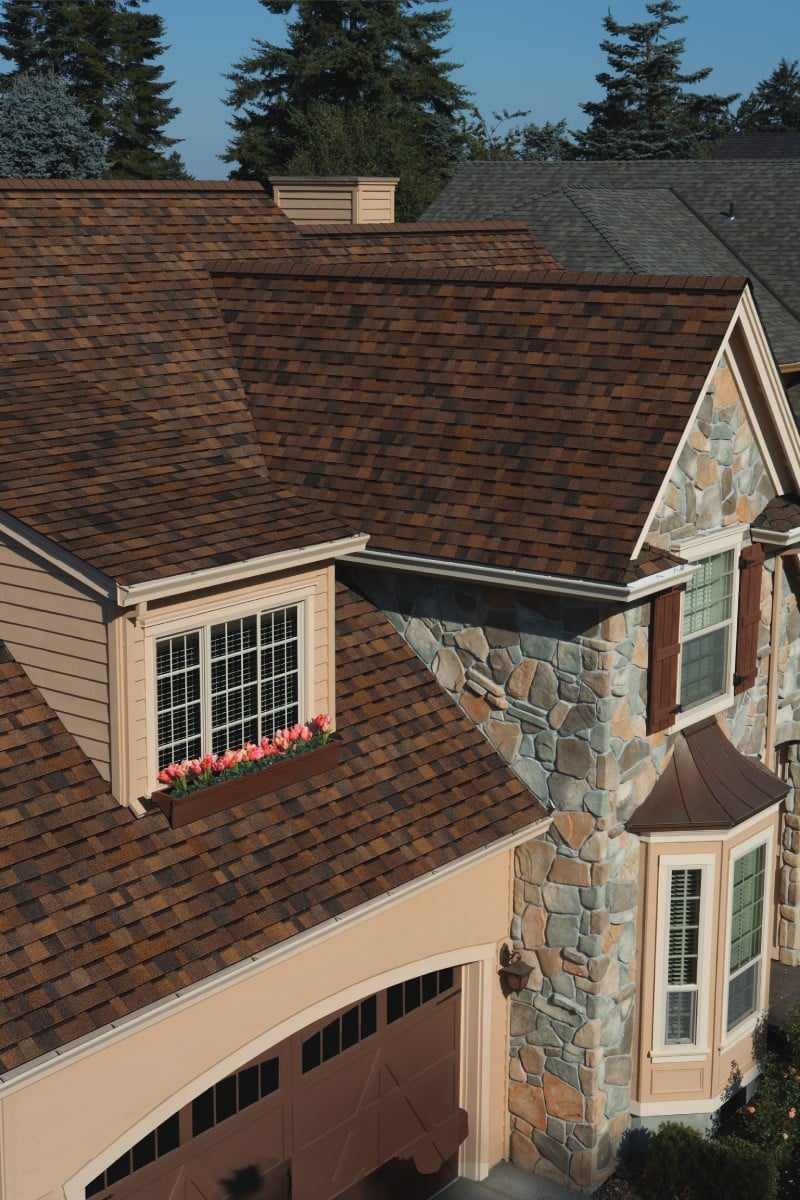
Wind is the harder of the two to spot. Wind damage on a roof shows as creased and lifted shingles, tabs that have lost their seal, and losses along the ridge and rake edges. Hail leaves a soft bruise where the granules are gone. Neither has to be leaking to be real, and neither shows from the driveway.
Siding
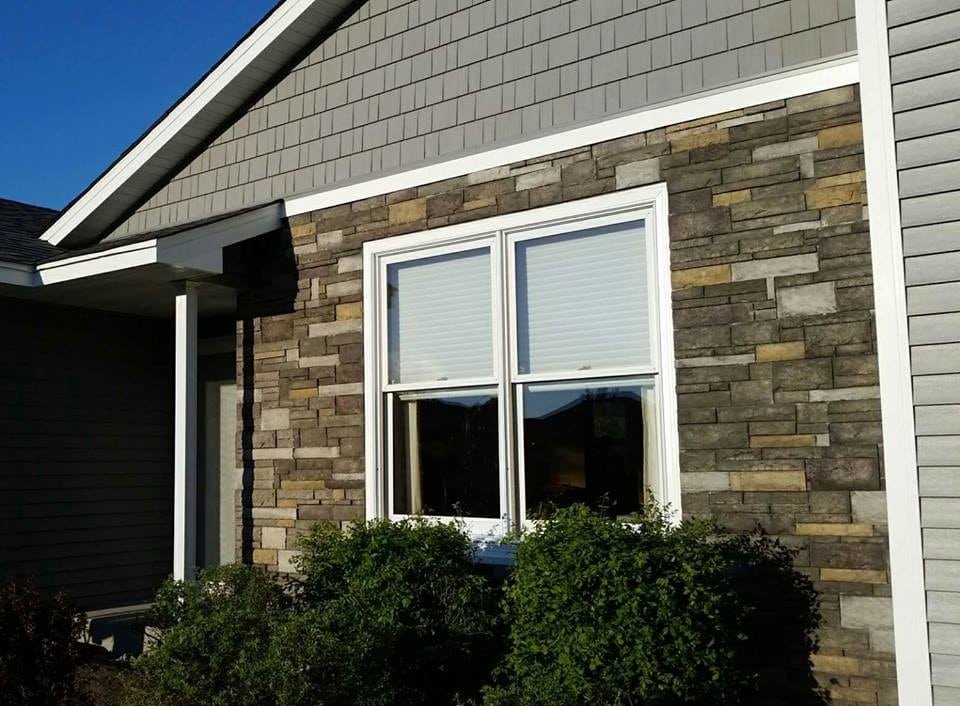
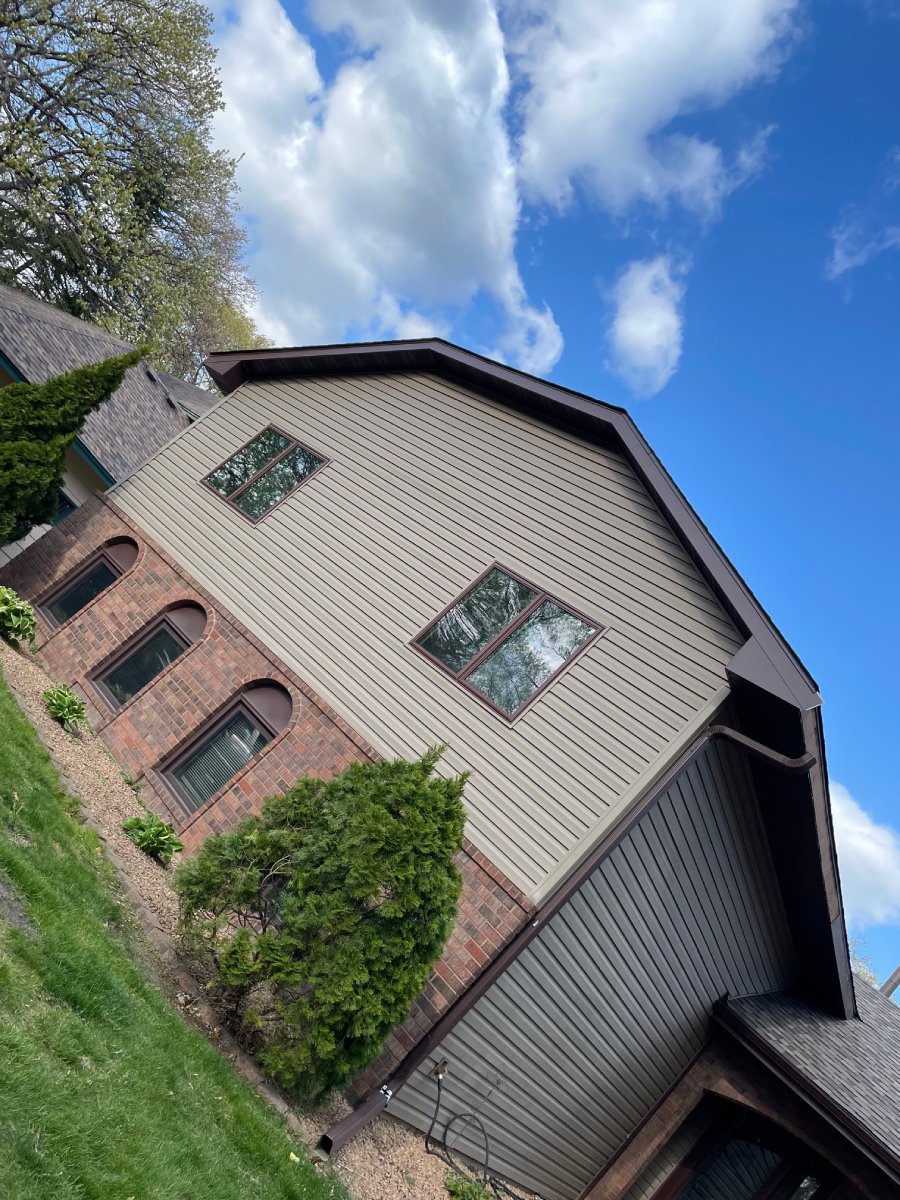
Wind works siding loose at the corners, and the top course, and panels that unlock at the top can look fine while letting water behind them all winter. Hail cracks vinyl, dents steel and aluminum, and chips fiber cement. Which elevation took the worst of it comes down to wind direction on the day, so we check all four rather than the street face.
Windows and Trim
Broken glass is the obvious damage and the rarest. What gets missed is trim. The vinyl or aluminum trim around each window and door cracks, pits, and pulls loose at the corners, and homeowners rarely think to mention it. Add dented cladding, torn screens, and seals that fog weeks later. If you are not sure what to look for, here are the warning signs of storm-damaged windows.
Gutters and Downspouts
Wind pulls gutters off the fascia and separates the seams. Hail dents the trough and apron, which is useful because those dents establish stone size across the whole property. A gutter left hanging or out of pitch is how ice dams get started the following January, so this is not a repair to leave until spring.
Also Worth Checking
Fascia and soffit, particularly where wind has pulled soffit panels out of their channel. Roof vents, flashing, the AC condenser, decks and railings, fences, and any shed or detached garage, which catches the same weather as the house and comes off the claim more often than anything else on the lot.
Repair Or Replace? The Five Questions
Nobody can answer this from the curb. These are what settle it.
- How much of the surface is affected. Inspectors mark test squares on each slope and elevation and count impacts inside them. A few marks in one place suggest a repair. Consistent damage across the whole plane suggests replacement.
- Whether the material still exists. Shingle lines get discontinued, and siding fades for two decades, so a patch can end up more conspicuous than the damage was. That is a fair point to put to your adjuster.
- What the damage is sitting on. Soft decking, wet sheathing, or a wall that has been quietly taking water behind loose siding changes the answer completely.
- How much service life was left. Patching a roof that has already lost most of its granules buys a season. We will tell you that rather than sell you the patch.
- Whether the storm caused it at all. Age, thin original installation, and poor attic ventilation all imitate storm damage. Better to hear it at the inspection than after a denial.
If the wind and hail turn out to be incidental and the roof was simply due, we will tell you that straight. Planning a new roof on your own terms beats filing a claim that goes nowhere.
Blaine Emergency Tree-Damage Restoration
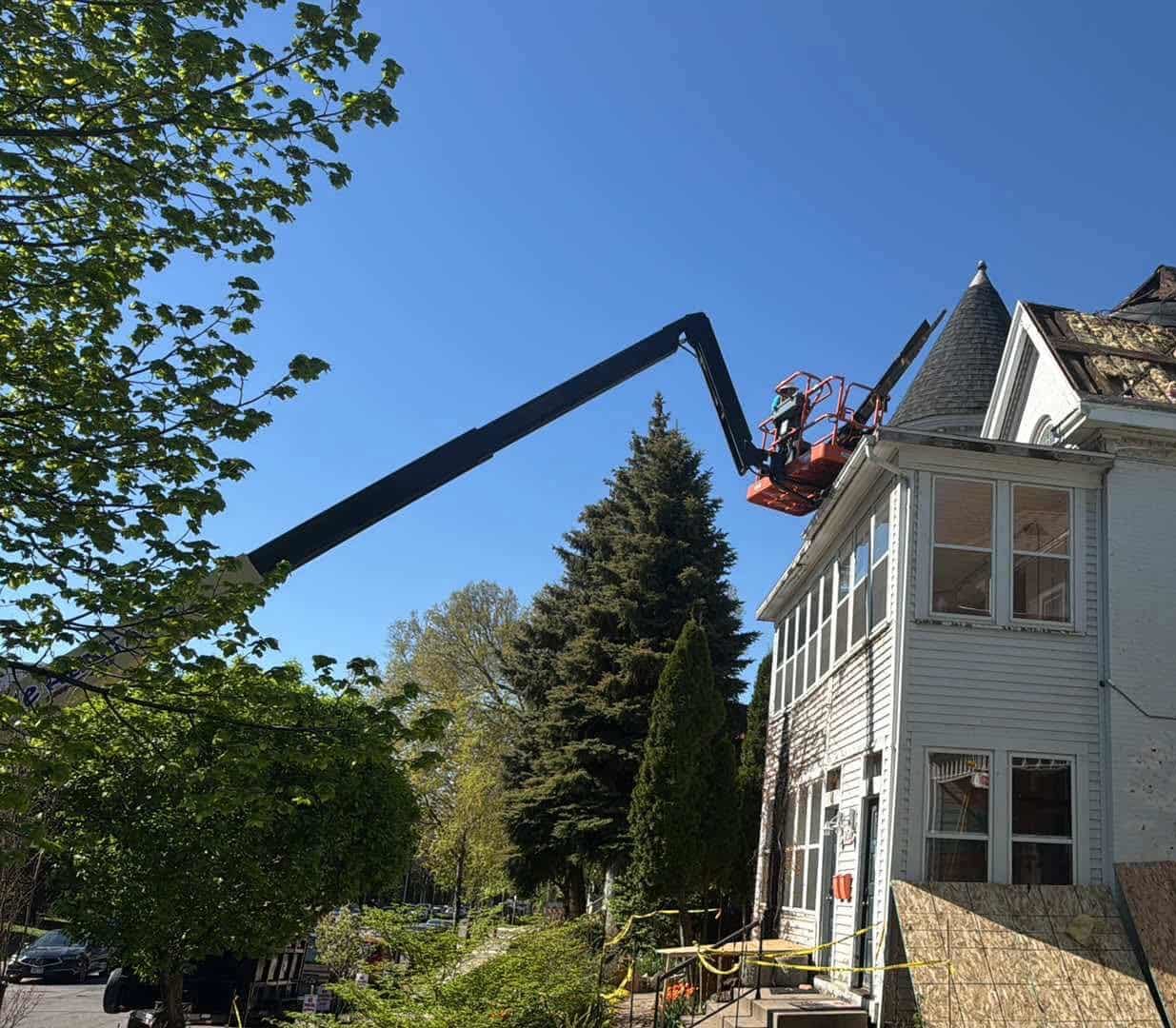
A tree fell onto the front of this Blaine home directly above the primary bedroom, creating a hole in the roof and significant structural damage, including damaged roof trusses. Advantage Construction installed an emergency tarp immediately after the loss, followed by a more permanent tarp after the insurance adjuster completed the inspection. Because the trusses were damaged, the repair required an engineer’s report and city plan review. The team repaired the framing, replaced damaged roof trusses and insulation, and completed the necessary interior ceiling repairs.
Homeowner tip: Trim aging trees within falling range of your home before a storm makes the decision for you
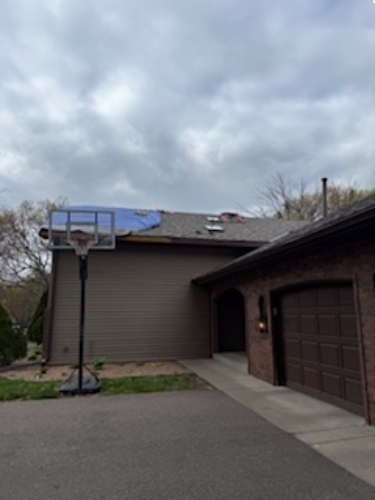
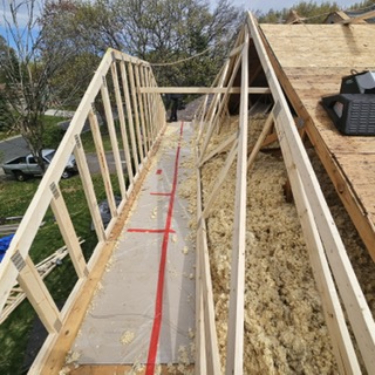
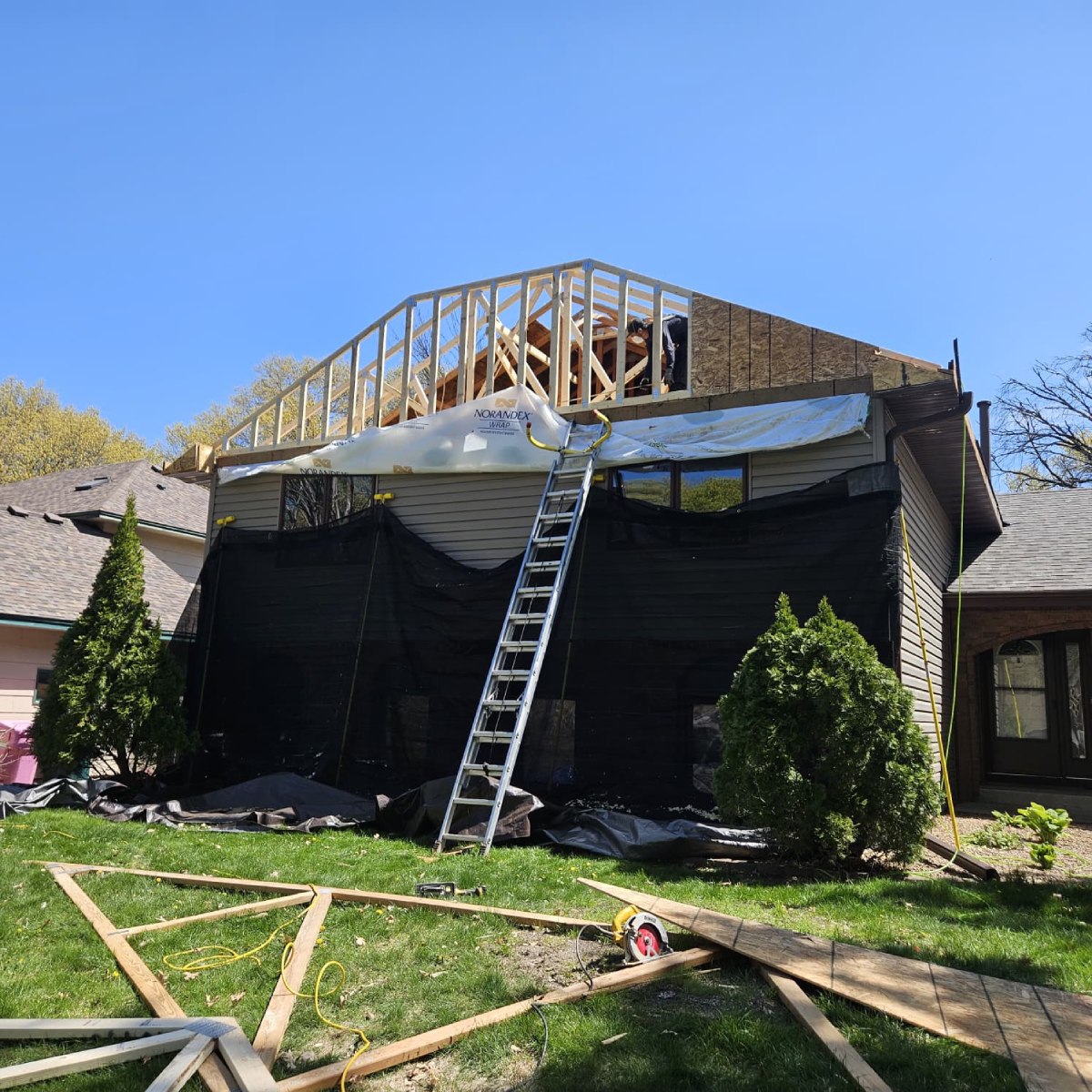
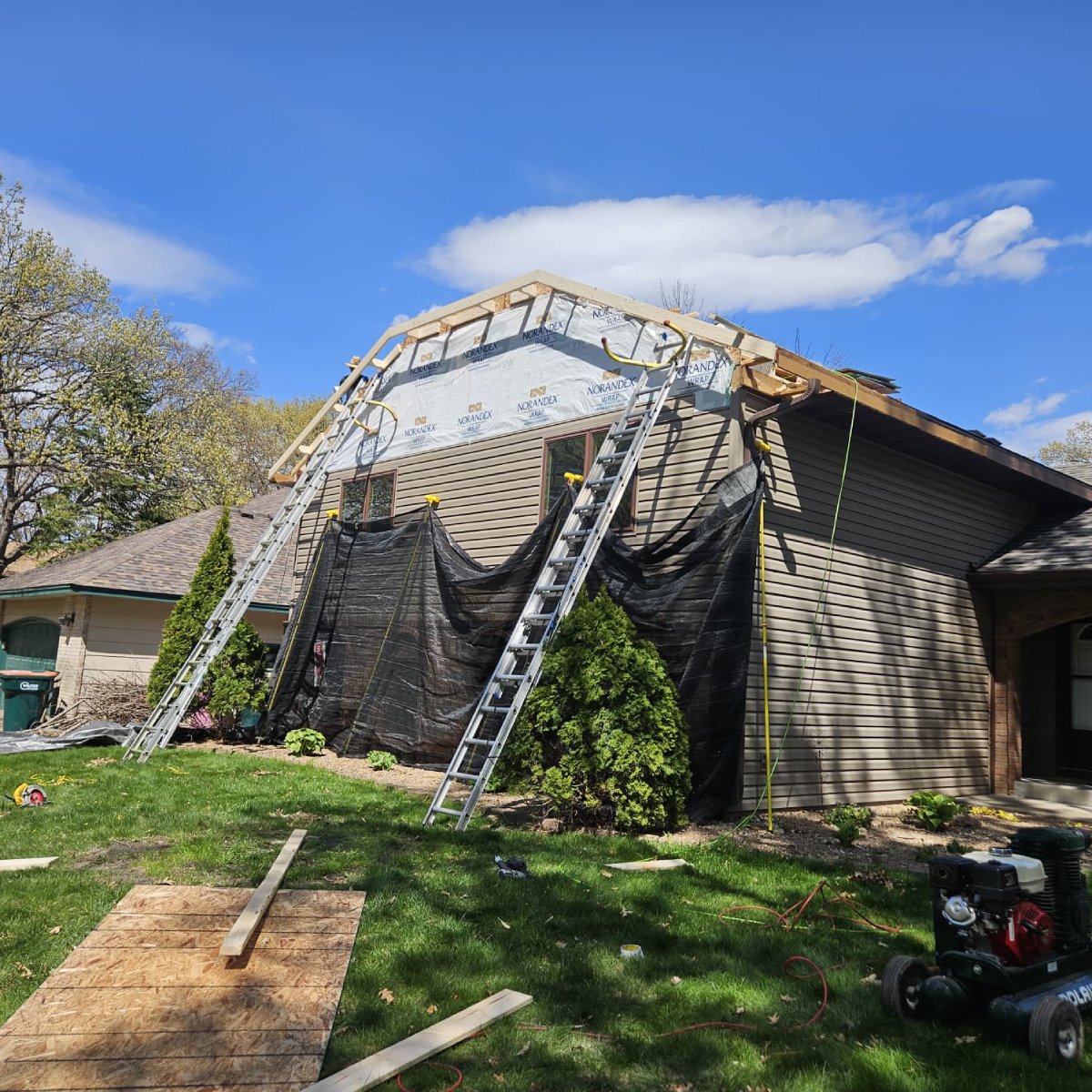
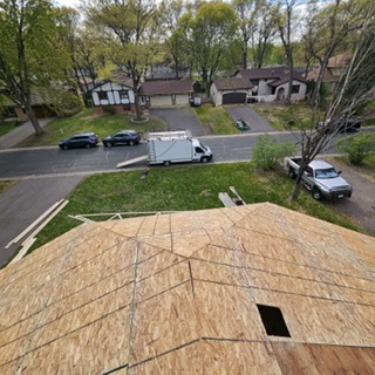
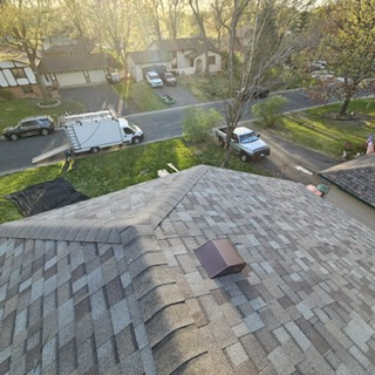
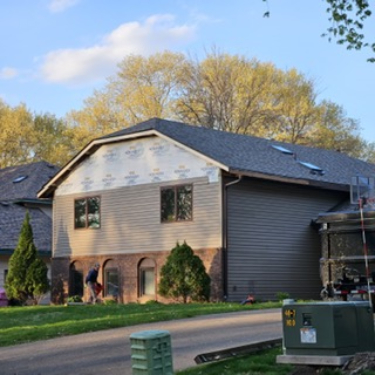
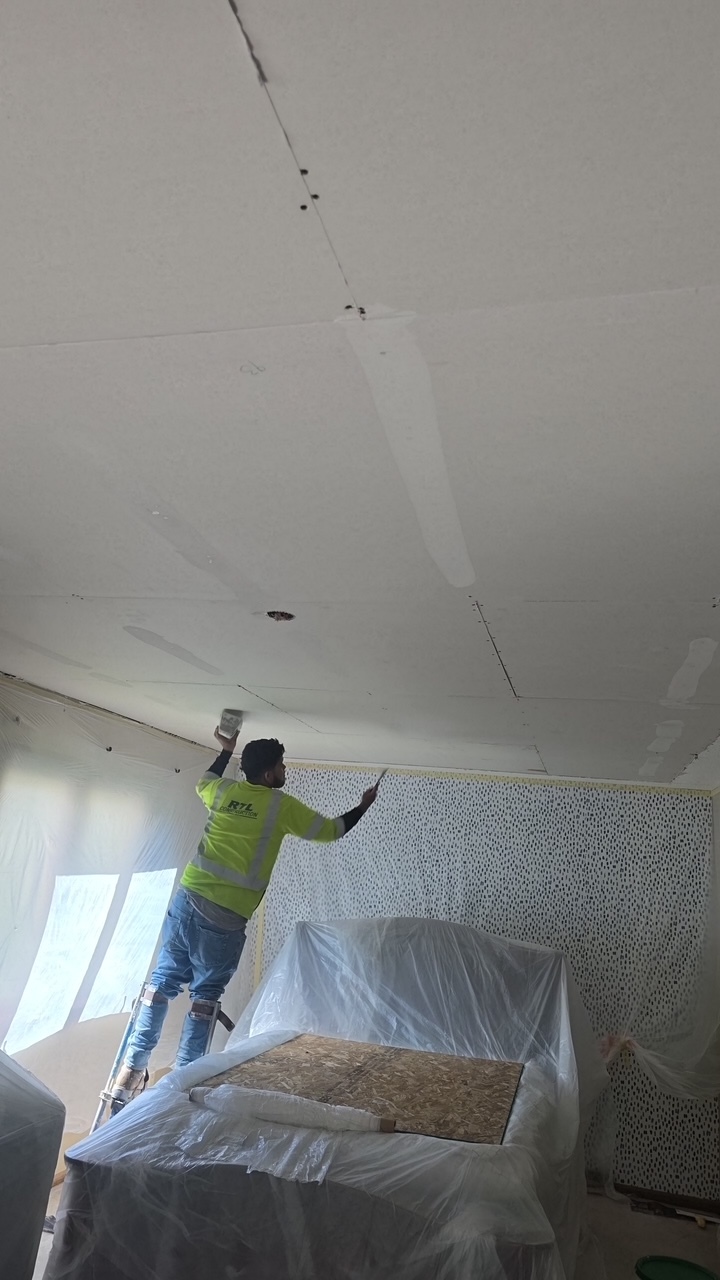
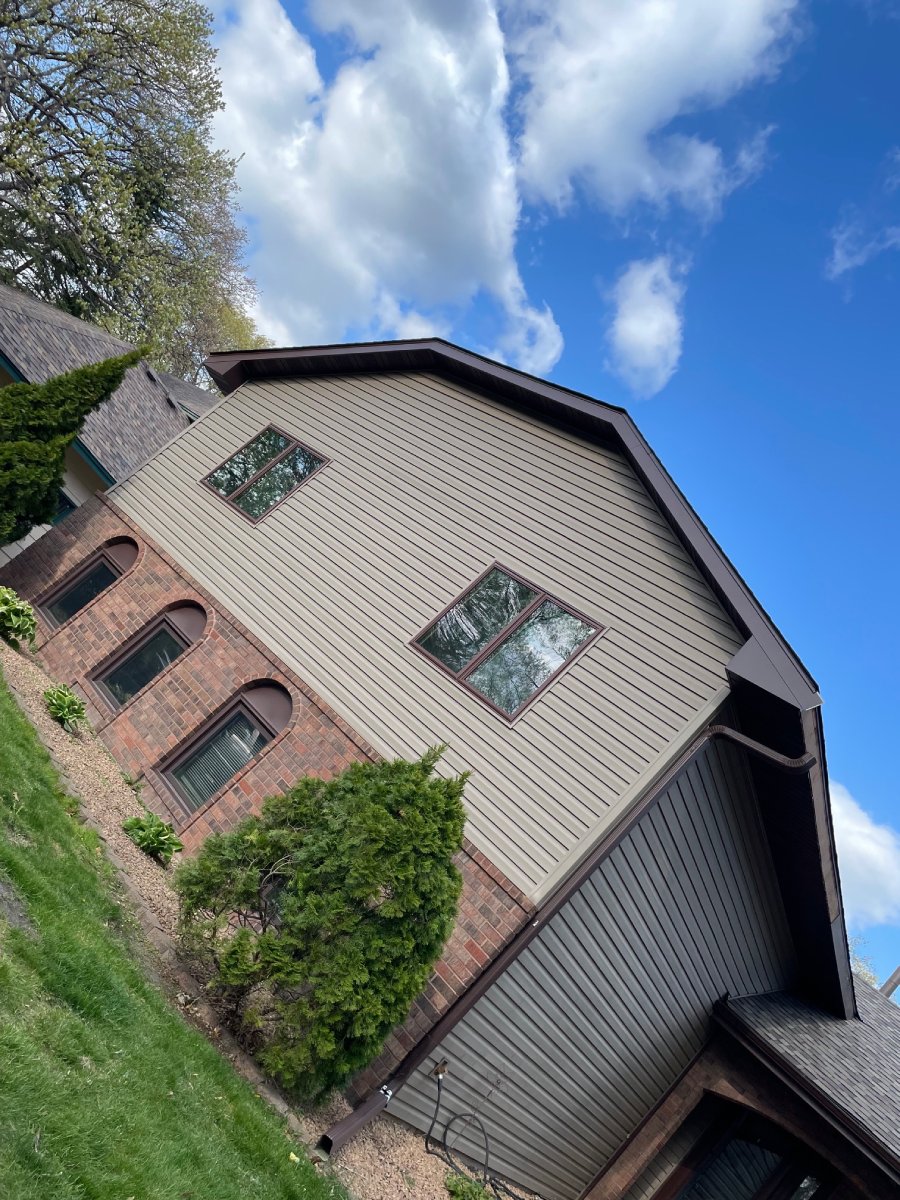
A tree through the roof is the kind of night no homeowner plans for. When it happens, you want one team that can secure the house immediately and see the whole repair through, structural work included. That’s the call we’re built to take.
Getting The Claim Documented
An adjuster works from the scope in front of them, so the job is making sure nothing is missing before the estimate gets written. Whether any of it is covered is your carrier’s decision, based on your policy, your deductible, and their read on the cause. What our insurance claims assistance does is get the damage on the record properly.
How we handle it
- Every affected component photographed and dated, sheds and detached garages included.
- An itemized written scope covering roof, siding, windows, gutters, trim, and flashing.
- We are on site while your adjuster is, so both parties are looking at the same evidence at the same time.
- Missed or disputed items get a written response with photographs attached.
- We pull the permits, meet the inspections, and keep the schedule inside your insurer’s repair window.
What the paperwork should tell you
- A deductible offer is a warning sign. Minn. Stat. § 325E.66 ensures transparency by preventing contractors from covering any part of your deductible to win your business. Remember, the initial estimate comes with an important notice, and any discounts will affect your claim.
- A cancellation notice should be attached. Under, Minn. Stat. § 326B.811, you a 72-hour window to cancel an insurance-funded roofing contract in writing after a claim denial. Plus, your contractor will provide a helpful detachable notice with this information.
- Nobody should ask you to sign the claim over. An assignment of benefits lets you transfer your rights to the contractor. While Minn. Stat. § 325E.67 outlines this process, we do not currently require one.
- The contractor choice is yours. A recommendation from your insurer is just that. The hire is yours to make.
- The license number belongs on the estimate. Residential contractors are licensed through the Minnesota Department of Labor and Industry, and anyone can search the register.
- Your policy sets the clock. Filing windows differ between policies, and some in Minnesota apply a separate deductible to wind and hail. Both are spelled out there.
If you have questions about your claim, the Minnesota Department of Commerce Disaster Information Center serves as the state’s resource. Its Consumer Services Center handles complaints against insurers.


Permits And Inspections In Blaine
Permits run through the Building Inspection division at City Hall on Town Square Drive NE. Your contractor pulls them, but here is what should be happening.
Roofing, siding, windows, and doors all need permits. Blaine requires a permit to re-roof, re-side, or replace windows and doors. These are issued online at the time of application rather than sitting in plan review, so there is no good reason for a delay on a storm job.
Small siding repairs are the exception. A permit is not required for minor repair work, which the city describes as something on the order of two or three pieces of vinyl. Anything past that needs one, and a building inspector will confirm where your job falls.
The barrier behind the siding matters. When a full section of siding is replaced top to bottom, Blaine requires the old water-resistive barrier removed and a new one installed, on houses and garages alike, whatever the build year. Ask any bidder whether their number includes it.
Storm work has its own routing. Blaine’s permit system has a damage repair type for fire, water, and natural causes, but storm-damaged roofing and siding go through the roofing and siding permit instead. A contractor who works here knows that. One who does not costs you a week.
Your contractor has to be registered with the city. Blaine requires contractors to register in its IMS system and hold a PRO account before pulling any permit. A crew that showed up after the storm will not be set up.
Manufactured homes have separate rules. Blaine has several manufactured home communities, and work there requires a park approval letter with the permit application. Winter installations after November 15 need a temporary permit under state guidelines.
Older homes and lead. Homes built before 1978, mostly in the south end, are likely to have lead paint under the current finish, and cutting into it requires a certified crew. Advantage carries EPA Lead-Safe Certified Firm status (NAT-F189197-2, expiring July 30, 2028), verifiable on the EPA firm locator. It changes containment, cleanup, and schedule.
Where We Work In Blaine
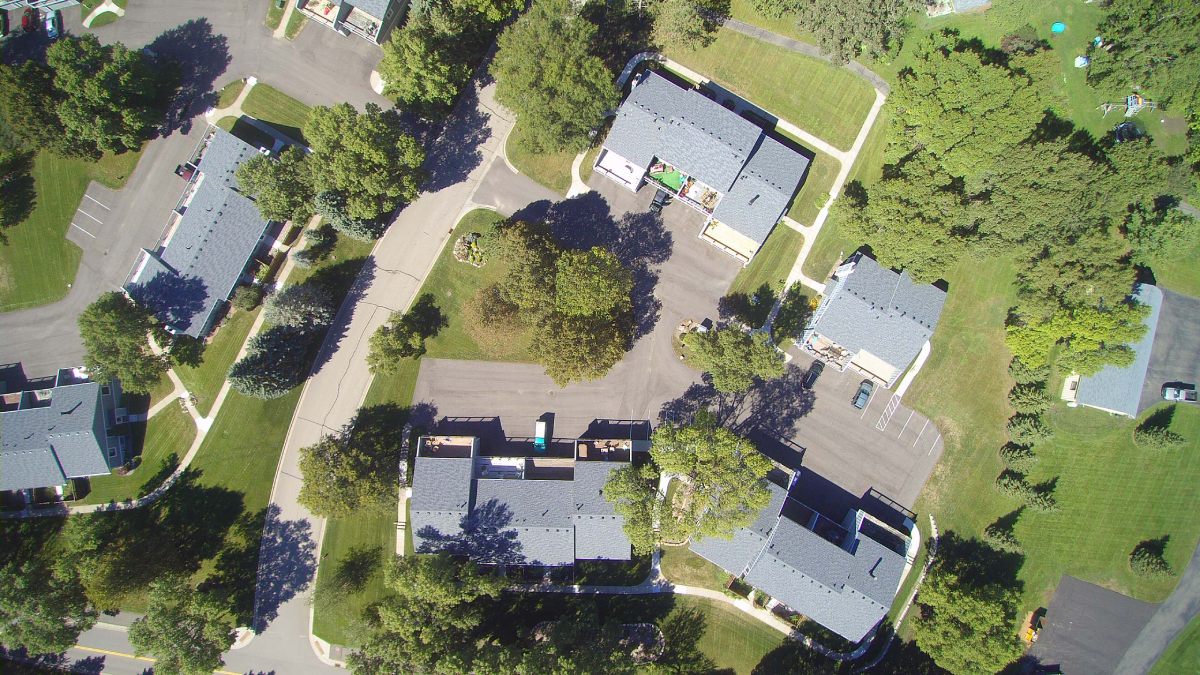
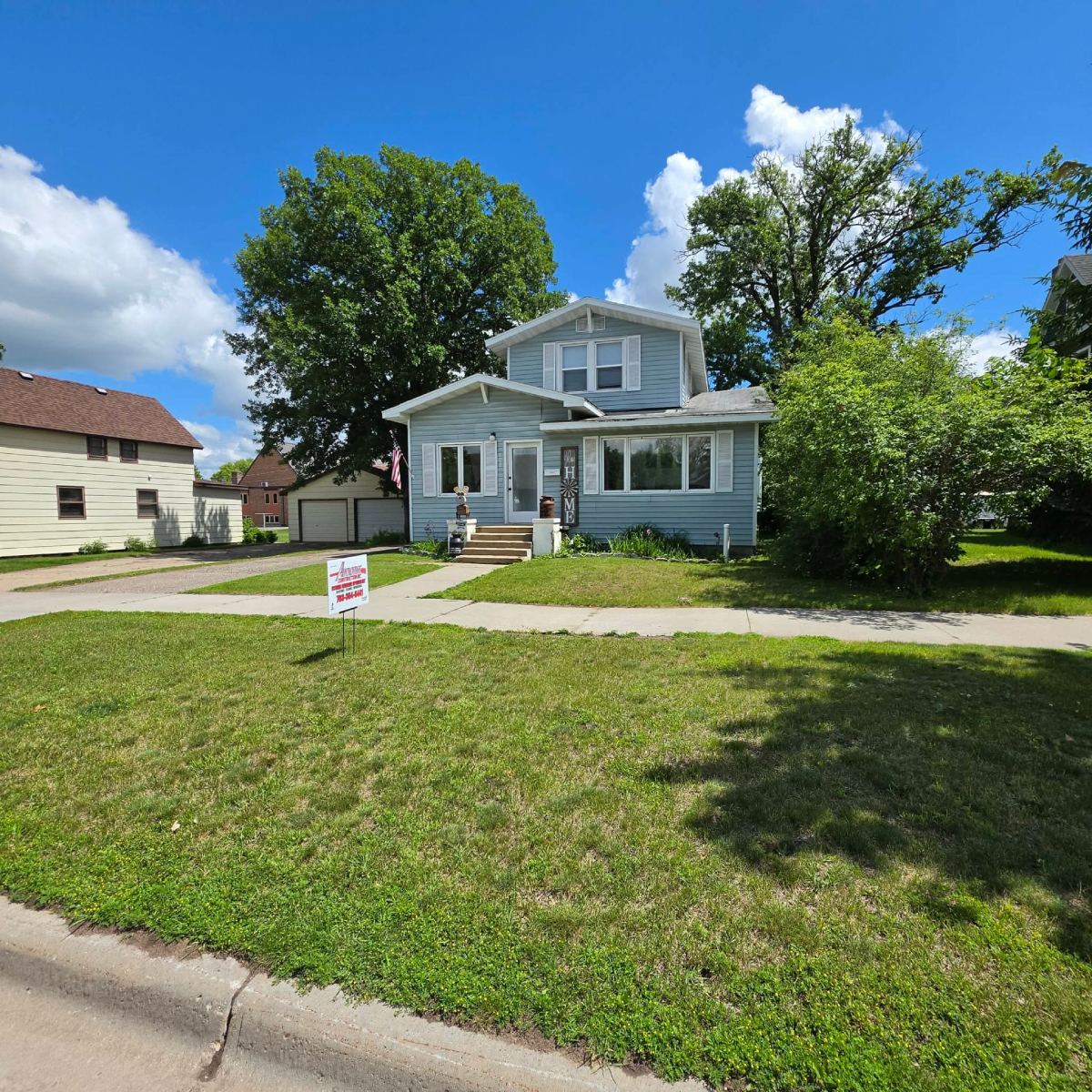
Blaine’s housing runs from the older, tree-covered blocks south of 95th near Highway 65 to the exposed newer subdivisions north of 109th and around the Lakes, and the wind reaches each differently. We work all of it, single-family through townhome, manufactured home communities, and small multifamily, plus the sheds and detached garages. Beyond the city limits, our service area covers the metro, greater Minnesota, and western Wisconsin.
Repairs We Handle After a Storm
Wind and hail rarely stop at one component, so all four get scoped together instead of quoted piecemeal.
- Roof repair and replacement deals with creased and unsealed shingles, ridge and rake losses, hail bruising, damaged decking, and the ventilation behind early roof failure.
- Siding installation covers panels worked loose by wind or cracked by hail, whole elevations matched for color and profile, and the new water-resistive barrier the city requires underneath.
- Window replacement takes in glass, sash, and full units, plus the cladding and the trim wrapping each opening, which sees more damage than the glass does.
- Seamless gutters means new runs, downspouts, and extensions, refastened to solid fascia and pitched so the winter does not start with ice dams.
One crew, one scope, one claim, instead of four contractors pointing at each other.
Why Blaine Homeowners Hire Us
Anyone can replace a roof. After a storm, what separates companies is what else they find and how well they write it down. Here is what to expect working with us:
- We inspect for wind, not just hail. Creased shingles, unsealed tabs, and soffit pulled from its channel are easy to walk past, and they are what a lot of Blaine claims actually turn on.
- We check the trim and the outbuildings. Both get left off claims routinely, and both are far harder to add once the estimate is written.
- We know how Blaine permits work. Registered with the city, right permit type, inspections scheduled, no lost week.
- We document rather than assert. Photographs, measurements, and a scope your adjuster can actually work from.
- We are still reachable in year six. Minnesota based, licensed, and here long after the storm chasers have moved to the next county.
- Credentials you can verify. Owens Corning Roofing Platinum Preferred, Owens Corning Top of the House certified installer, BBB A+ rated, 4.8 stars across 700+ Google reviews. Bilingual project managers available.
None of it obligates you to anything. Take the documentation and get a second opinion if you want one.
Schedule Your Free Blaine Storm-Damage Inspection
Get on the schedule while the storm is recent, because damage gets harder to attribute to a specific date the longer it sits undocumented.
An hour on site gets you photographs of every damaged component, a written scope your adjuster can use, and an honest answer on whether filing is worth your deductible. Have the storm date ready when you reach us, and mention any active leak first, because that moves you up the list.
Frequently Asked Questions
How soon should I get my Blaine home inspected after a storm?
As soon as you can. Policies set deadlines for filing, and storm damage rarely announces itself in the first season, so a roof can look normal from the street while the clock runs out. Early documentation also ties the damage to a specific date, which matters if another storm arrives before you file.
How do I know if it was wind damage? Nothing looks broken.
That is normal and it is the reason wind claims get missed. Wind creases shingles and breaks their seal without removing them, so the roof looks intact from the ground while individual shingles lift in the next gust. It shows up as a leak two or three years later. An inspection settles it in an hour.
Do I need a permit to fix storm damage in Blaine?
For re-roofing, re-siding, and window or door replacement, yes. Very small siding repairs, on the order of two or three pieces, generally do not need one, and a building inspector can confirm. Your contractor should be pulling anything required and needs to be registered with the city to do it.
For re-roofing, re-siding, and window or door replacement, yes. Very small siding repairs, on the order of two or three pieces, generally do not need one. Your contractor should be pulling anything required and must be registered with the city. Blaine’s roofing, siding, and stucco permit page lists what applies.
Does new siding need a new barrier underneath?
If a full section is replaced top to bottom, yes. Blaine requires the old water-resistive barrier to be removed and a new one installed on houses and garages alike, regardless of the building’s age. Confirm that any quote includes it, since it is written into Blaine’s siding permit code.
Will insurance cover the damage?
That depends on your policy, your deductible, and your carrier’s view of the cause. Wind and hail are commonly covered, though some Minnesota policies carry a separate deductible for them. We document thoroughly, and knowing when a siding claim is worth filing is part of that.